Brief
Team
Amiti Aunmozhi
Design an innovative, future-ready bicycle for a specific user group by researching their needs, challenges, and behaviors, then creating a systems-driven solution that meaningfully improves their commuting or work experience. The project focuses on using user insights to solve real problems through thoughtful integration and purposeful design.
Scope: 12 weeks (Spring 2025 Studio)
Ben Jungblut
Bryce Kelly
Isa Blair
Parker Oelrich
Why Pulse?
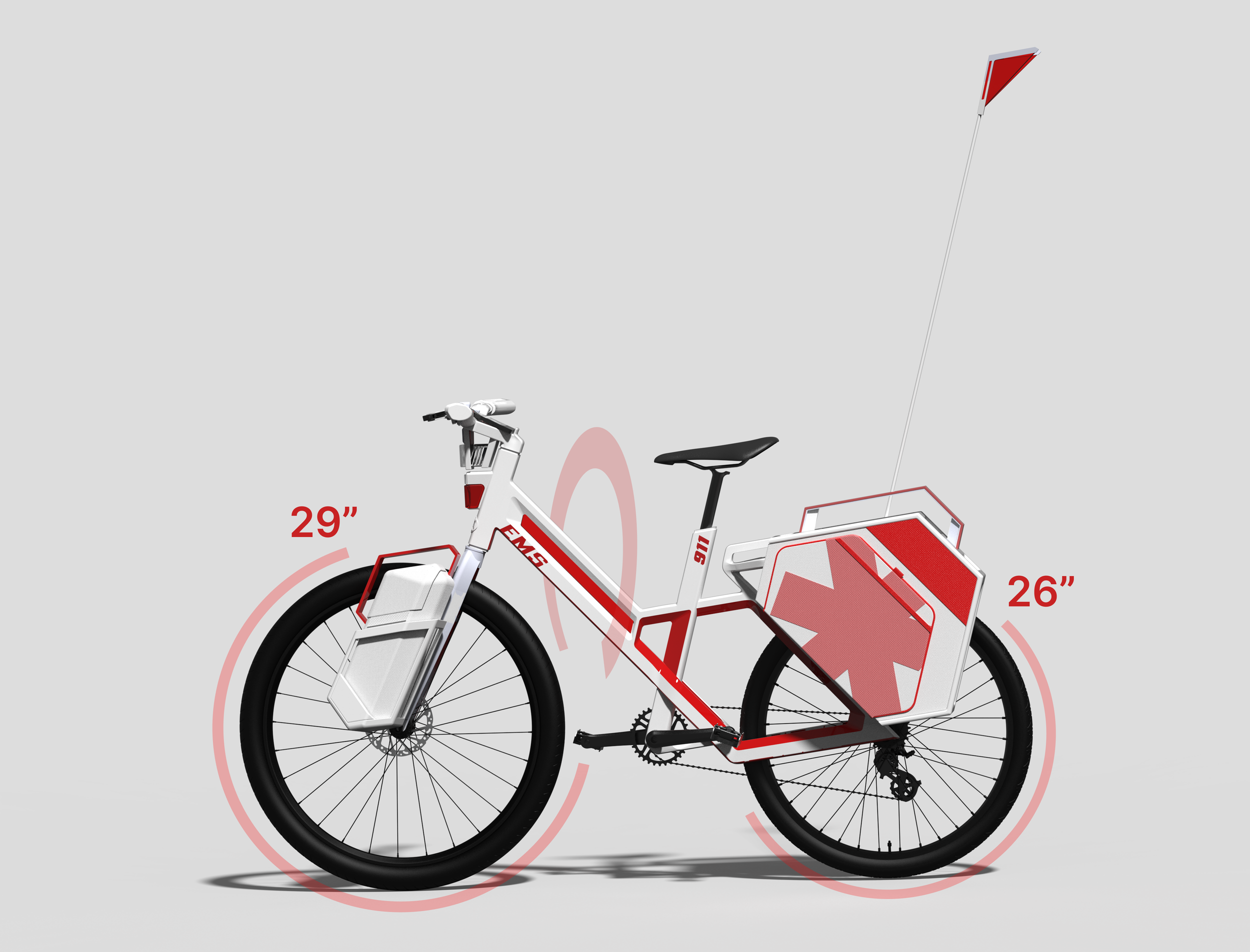
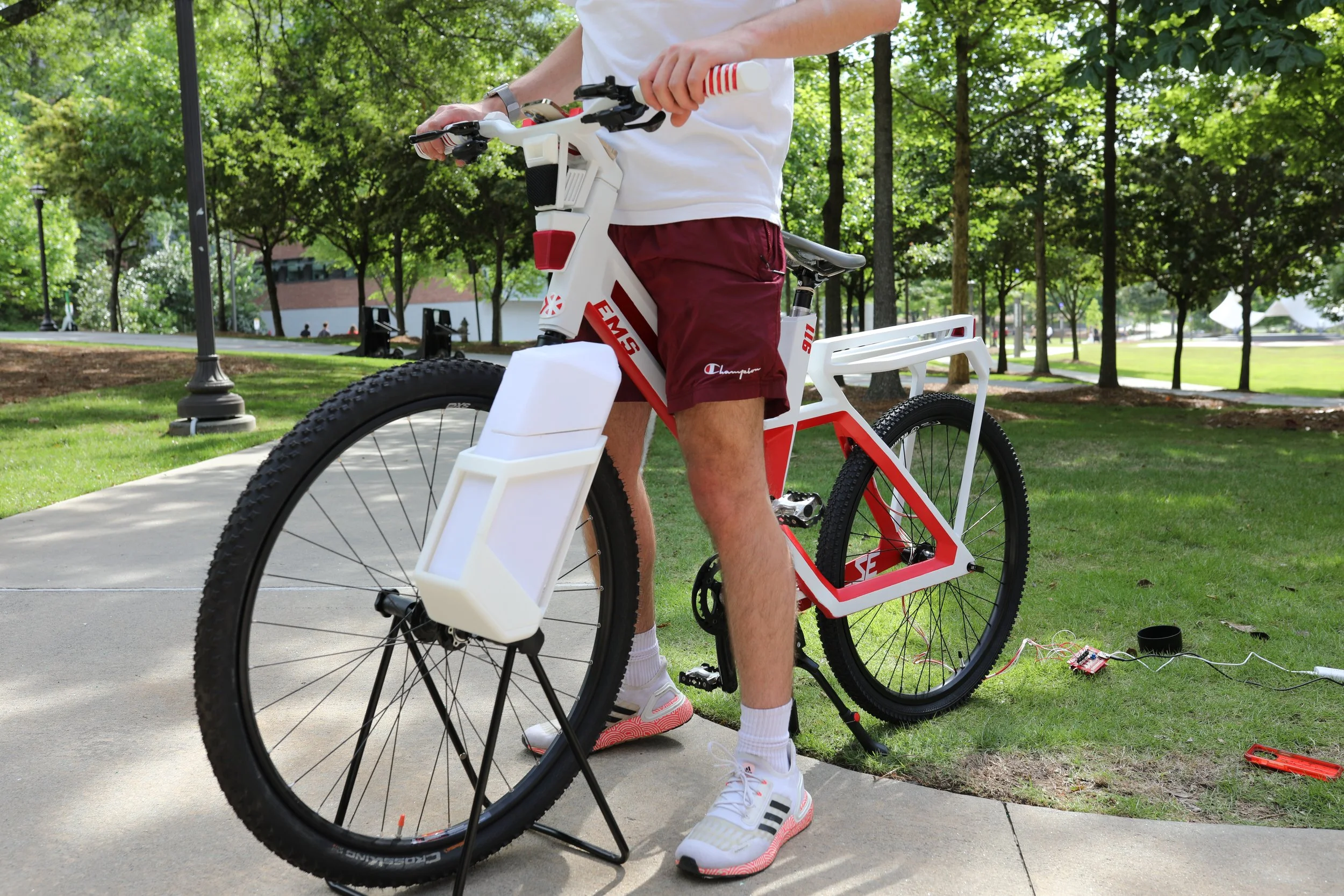
supports the physical demands of emergency response and reduces mental stress
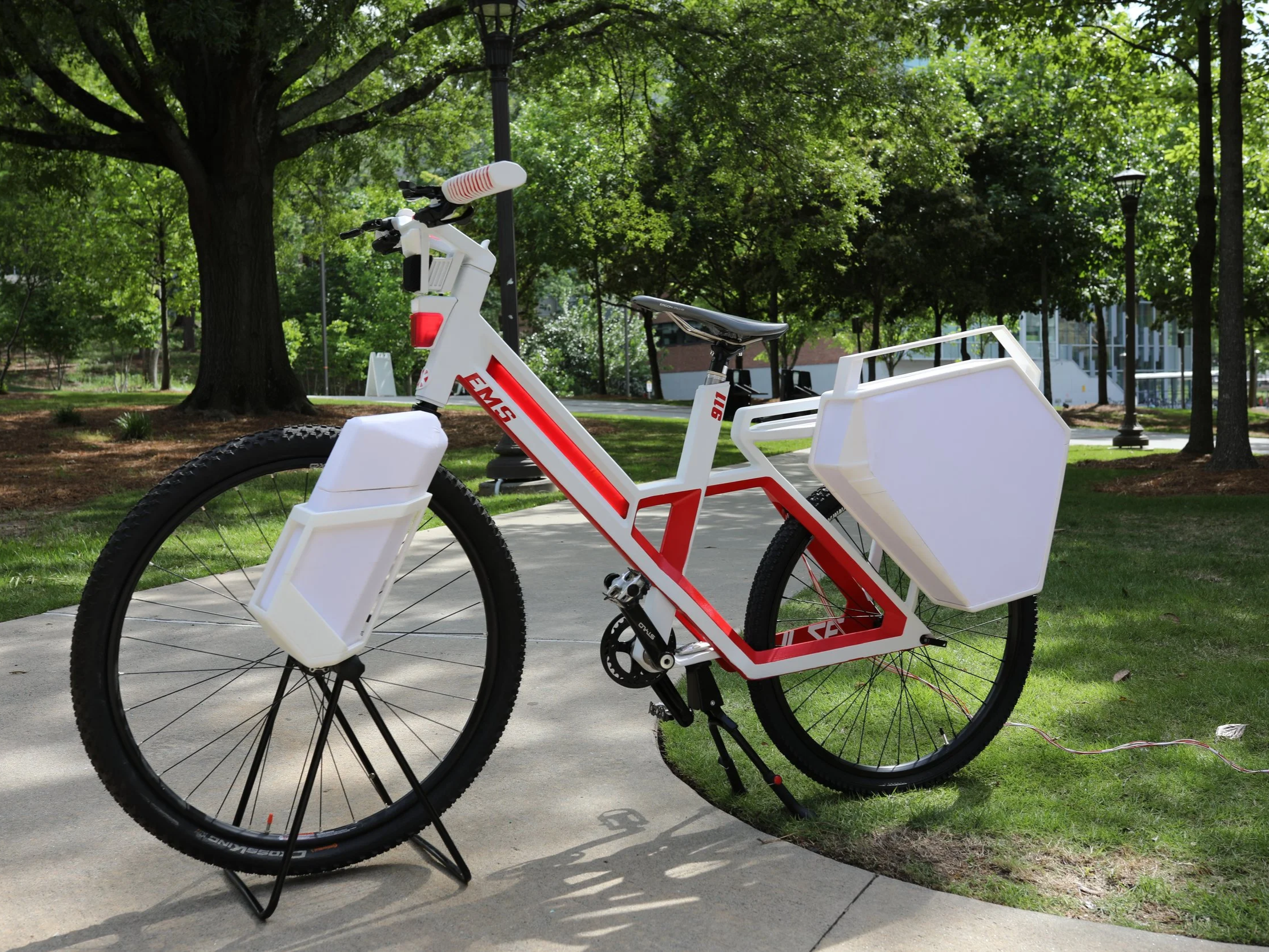
step through frame
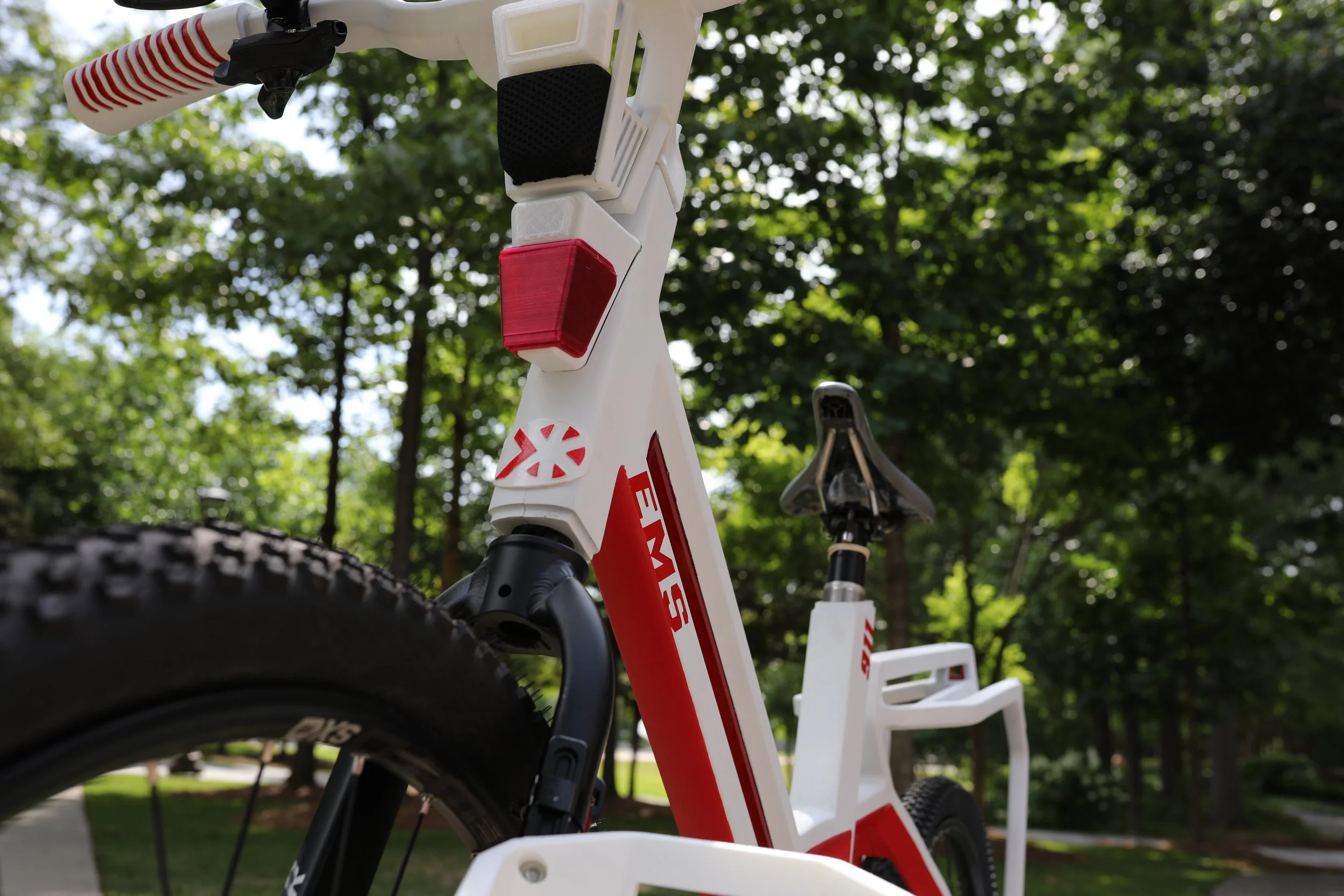
Pulse is bold, not just about function, but has a presence
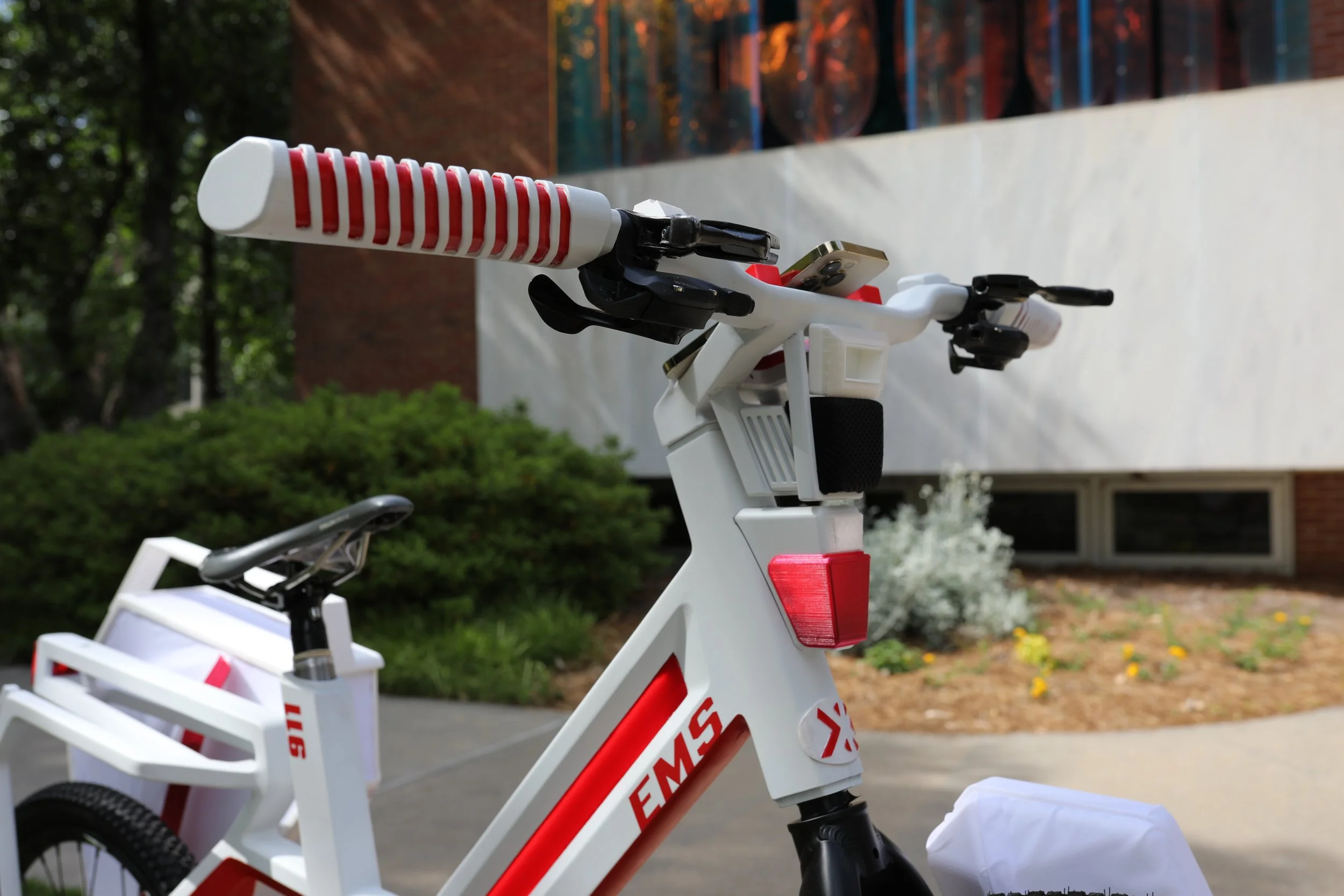
bold recognizable labeling demands authority in crowded environments
Parallel line form visually creates a barrier so medics can perform their duties
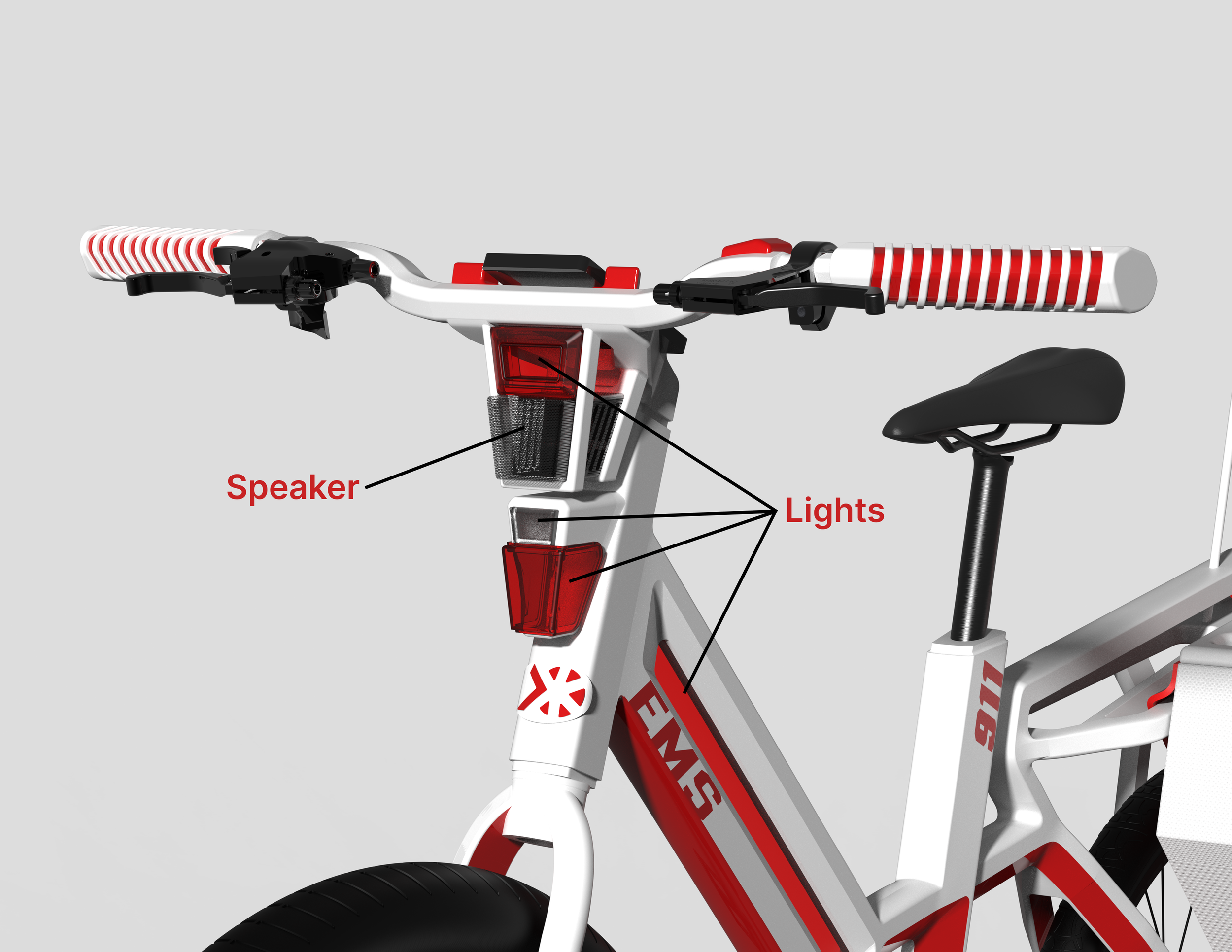
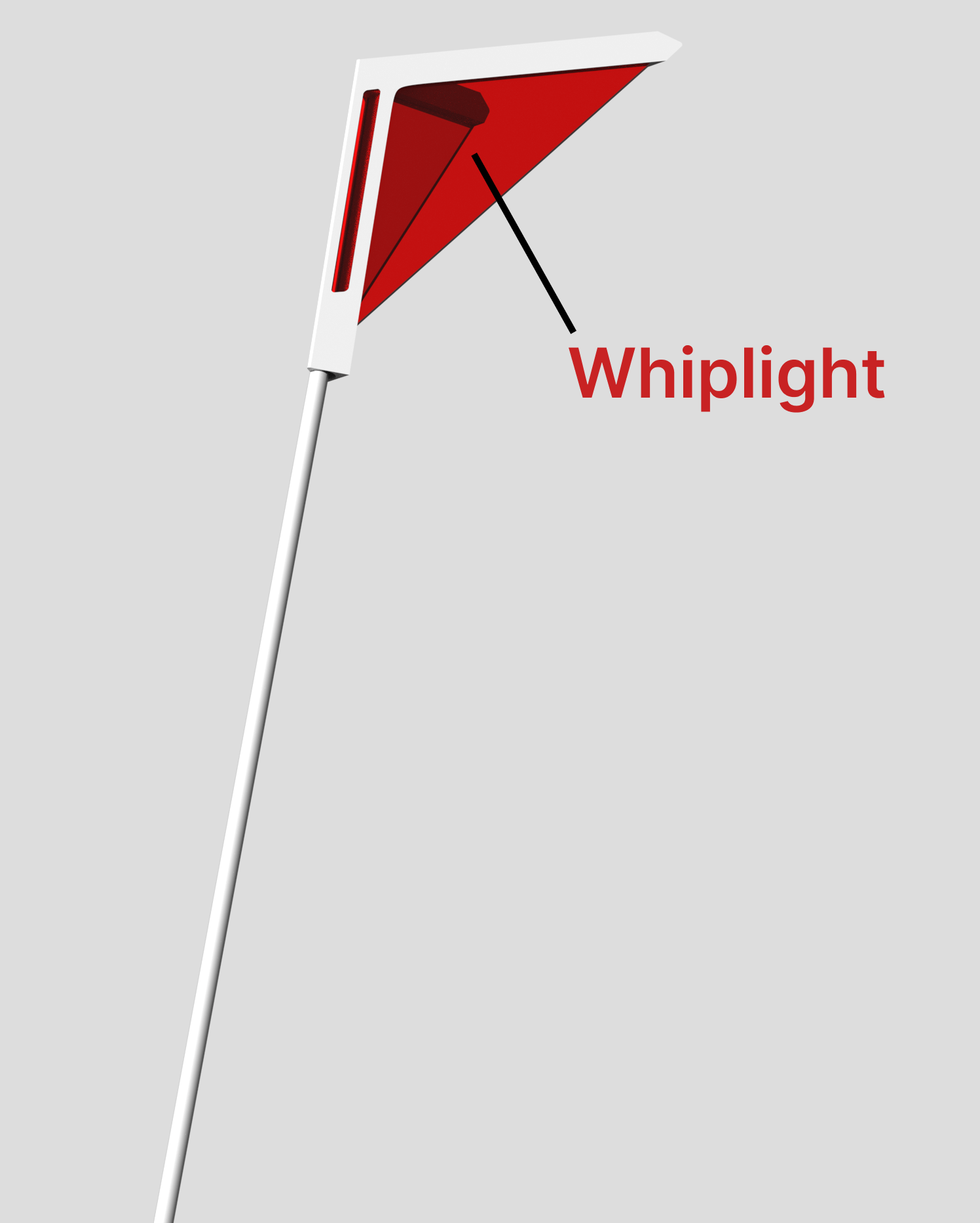
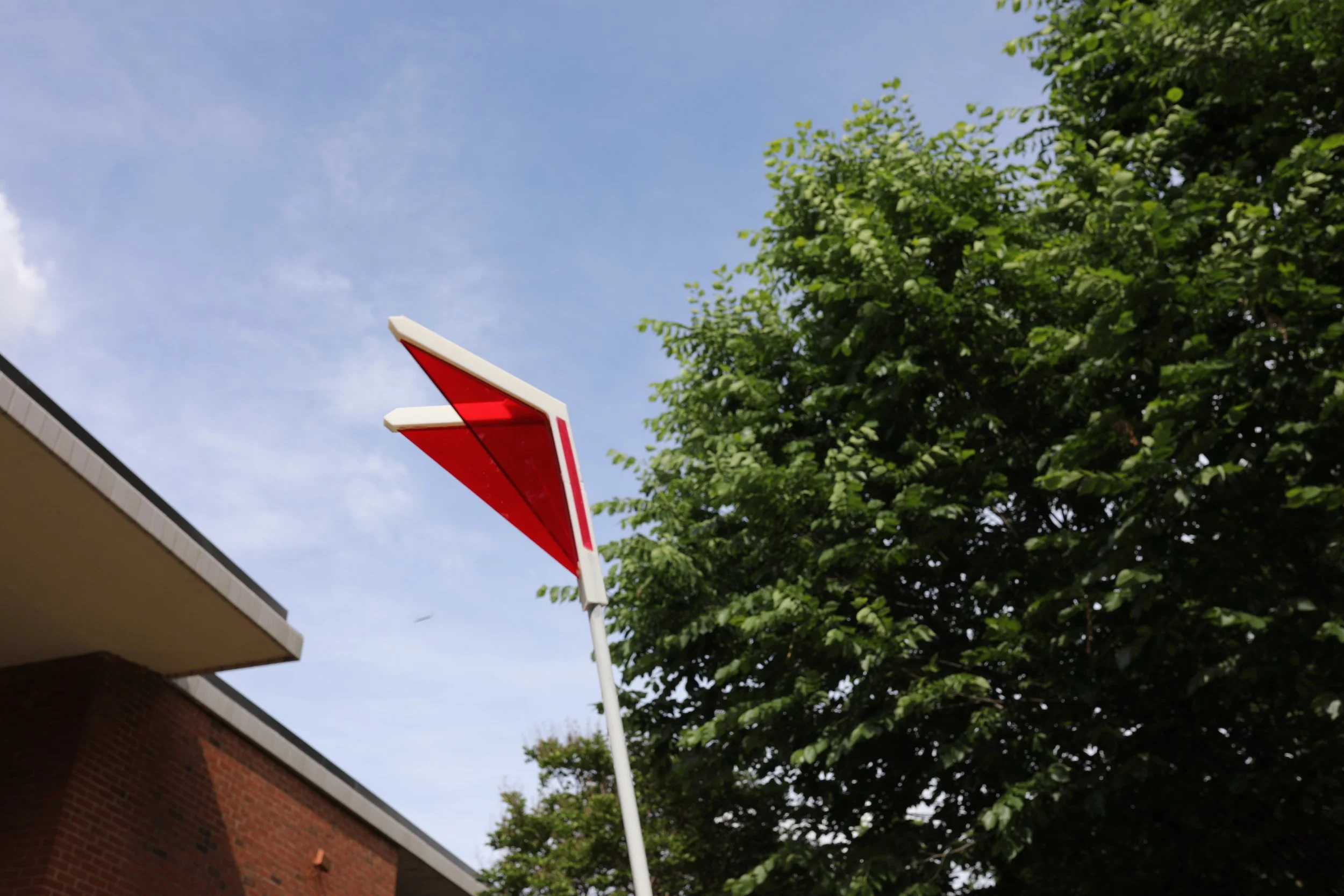
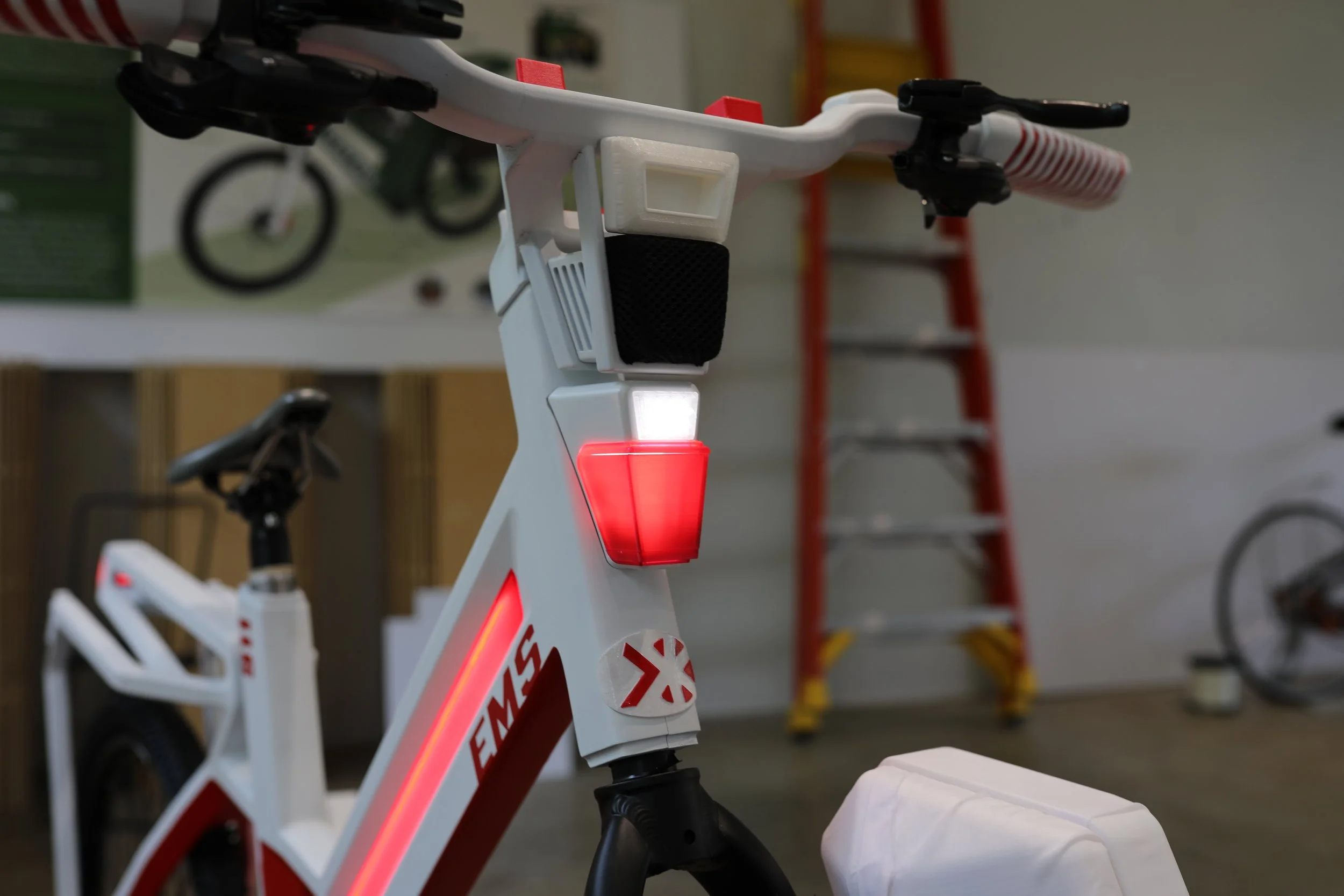
360 degree lighting system for greater visibility (lighting all around and even upwards)
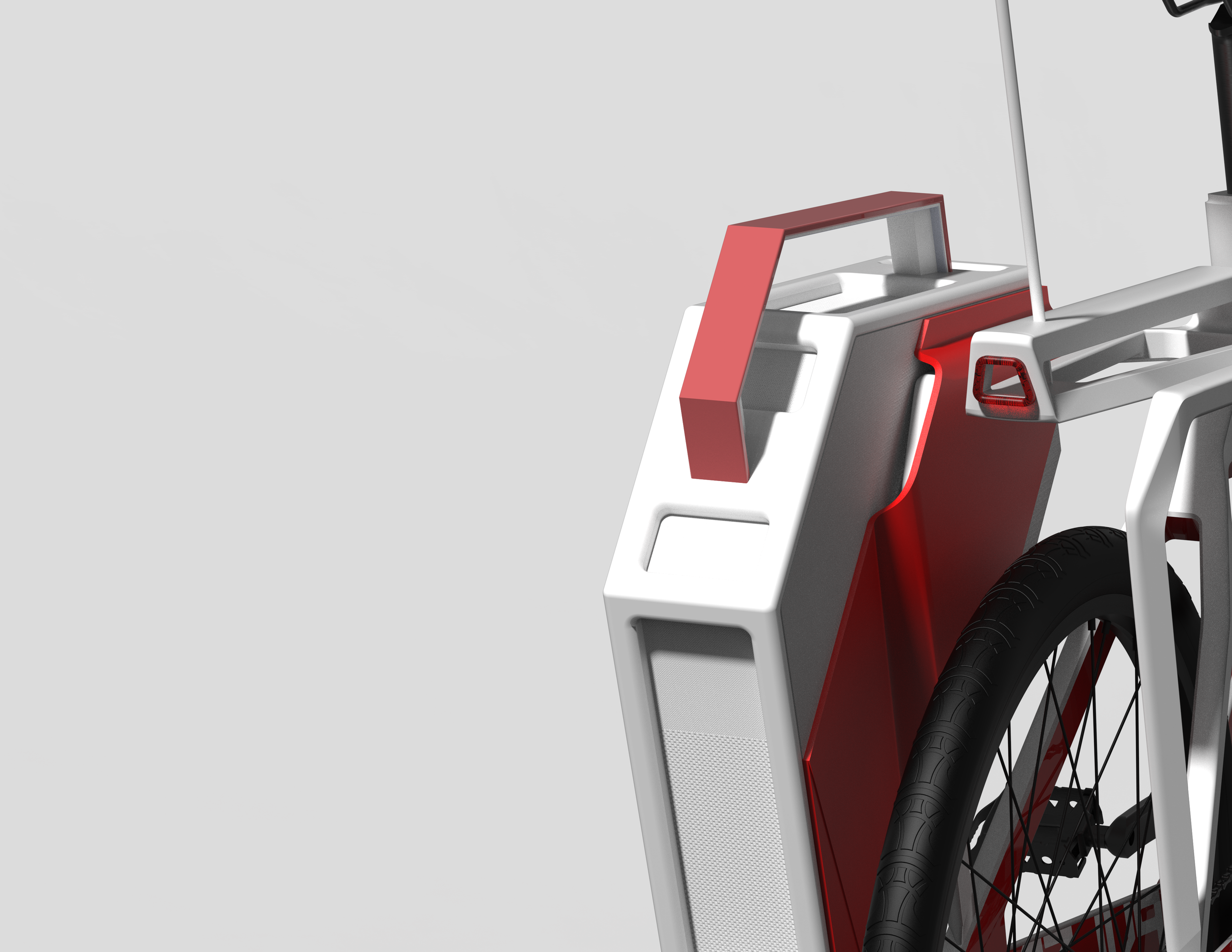
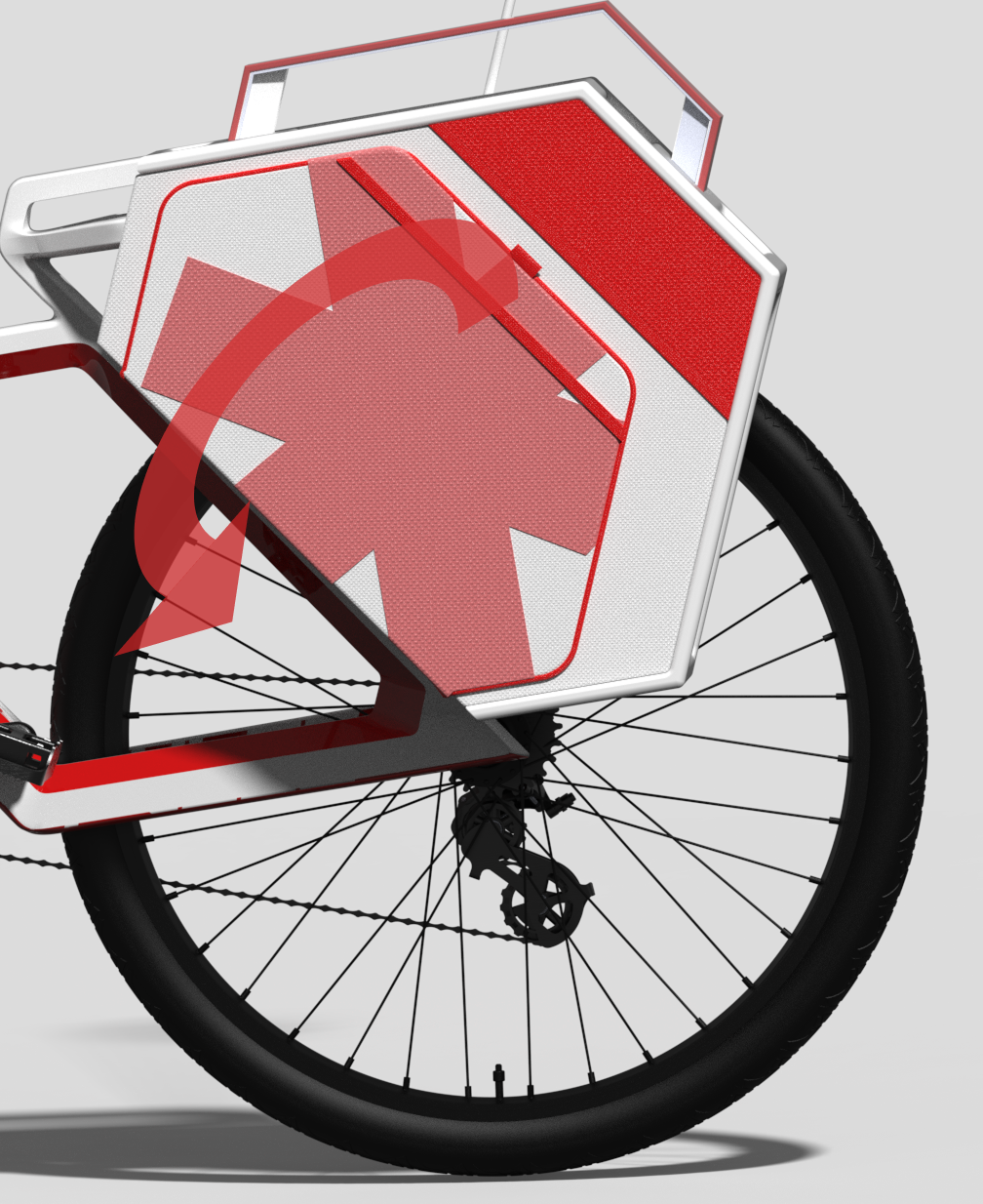
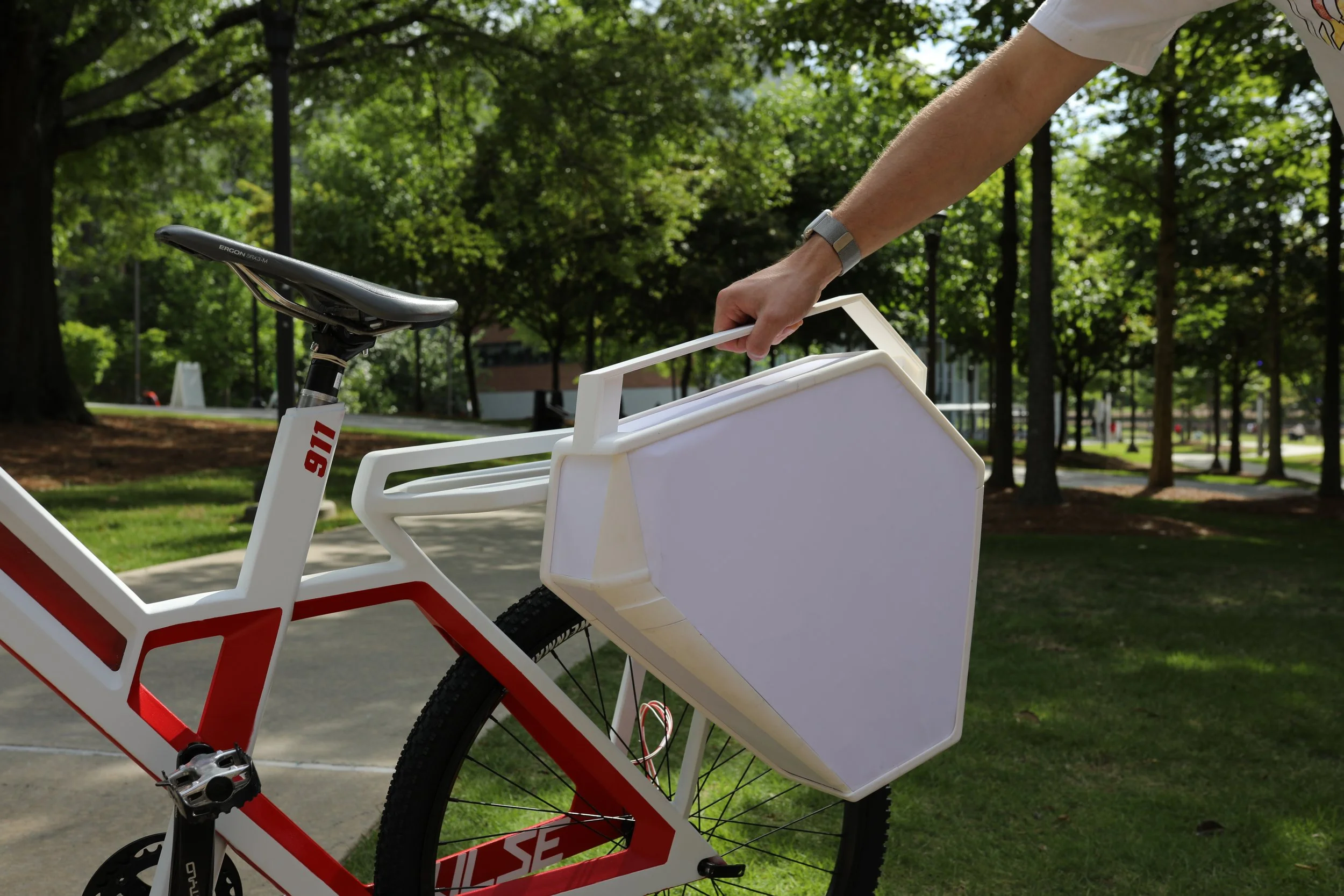
Cargo snaps into places with clips and stays on sue to slanted racking system
cargo can also be opened while still on the bike speeding up treatment
Two wheel sizes:
Bigger Front wheel: allows the bike to go over rougher terrain easier because it has a lower angle of attack
Smaller back wheel: the lower wheel helps stabilize the bike by lowering the weight of cargo to lower center of gravity. Also allows the rider to accelerate quicker because they can generate torque faster.
Abstract
Large public events—festivals, races, concerts, and sporting gatherings—legally require on-site EMS support once attendance exceeds 500 people. These environments are dense, unpredictable, and often difficult to navigate quickly, making fast medical response essential yet challenging.
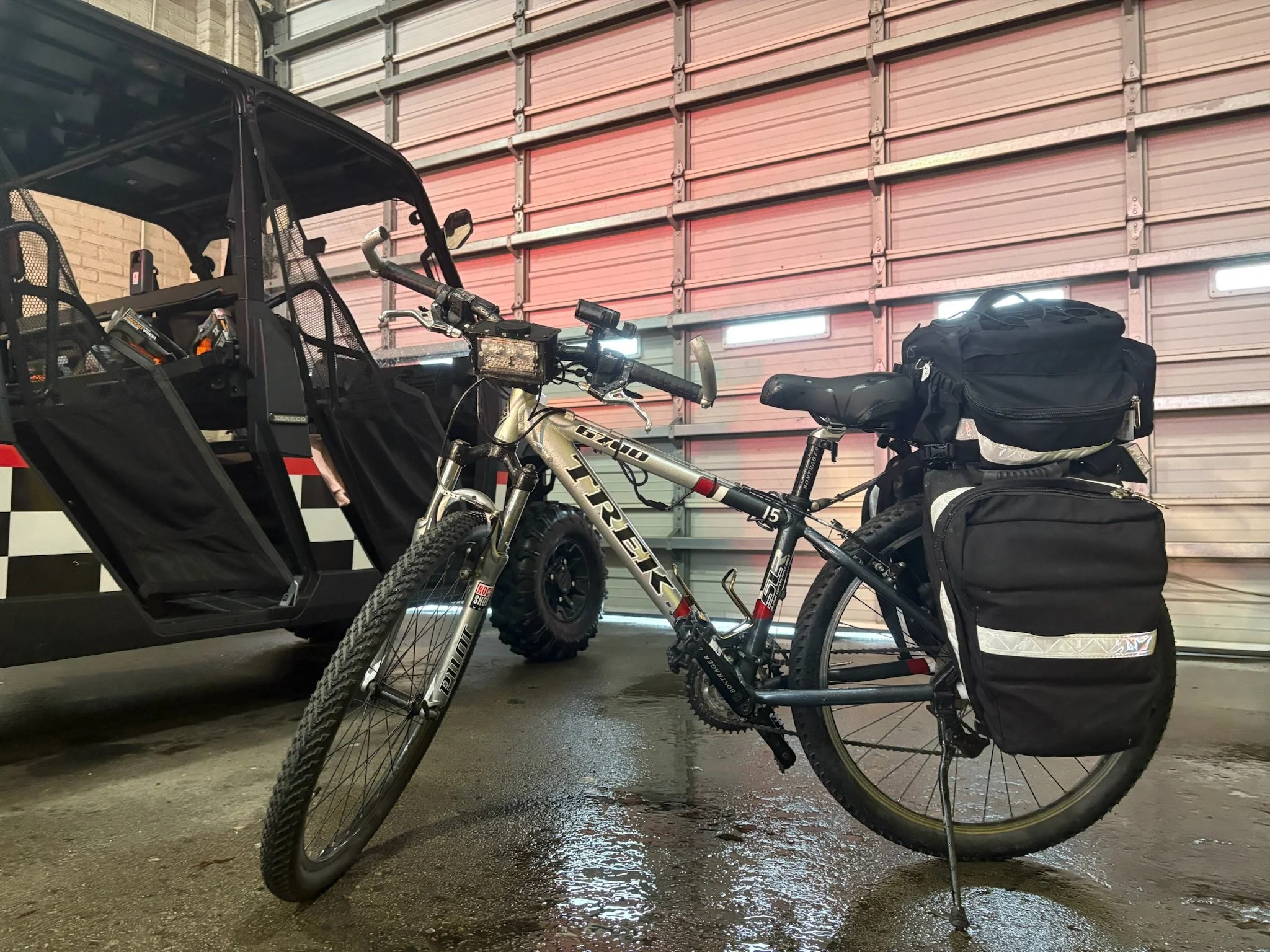
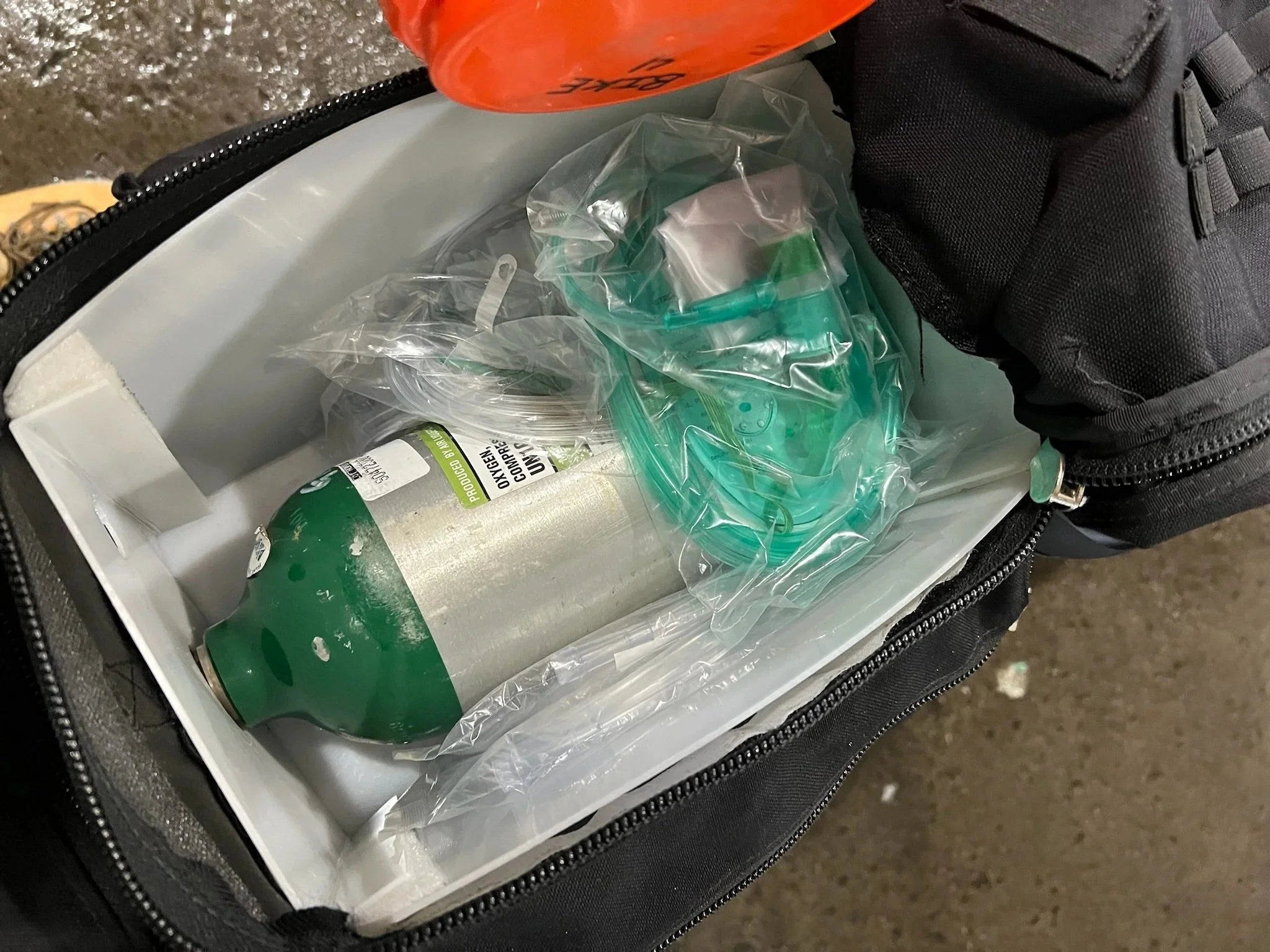
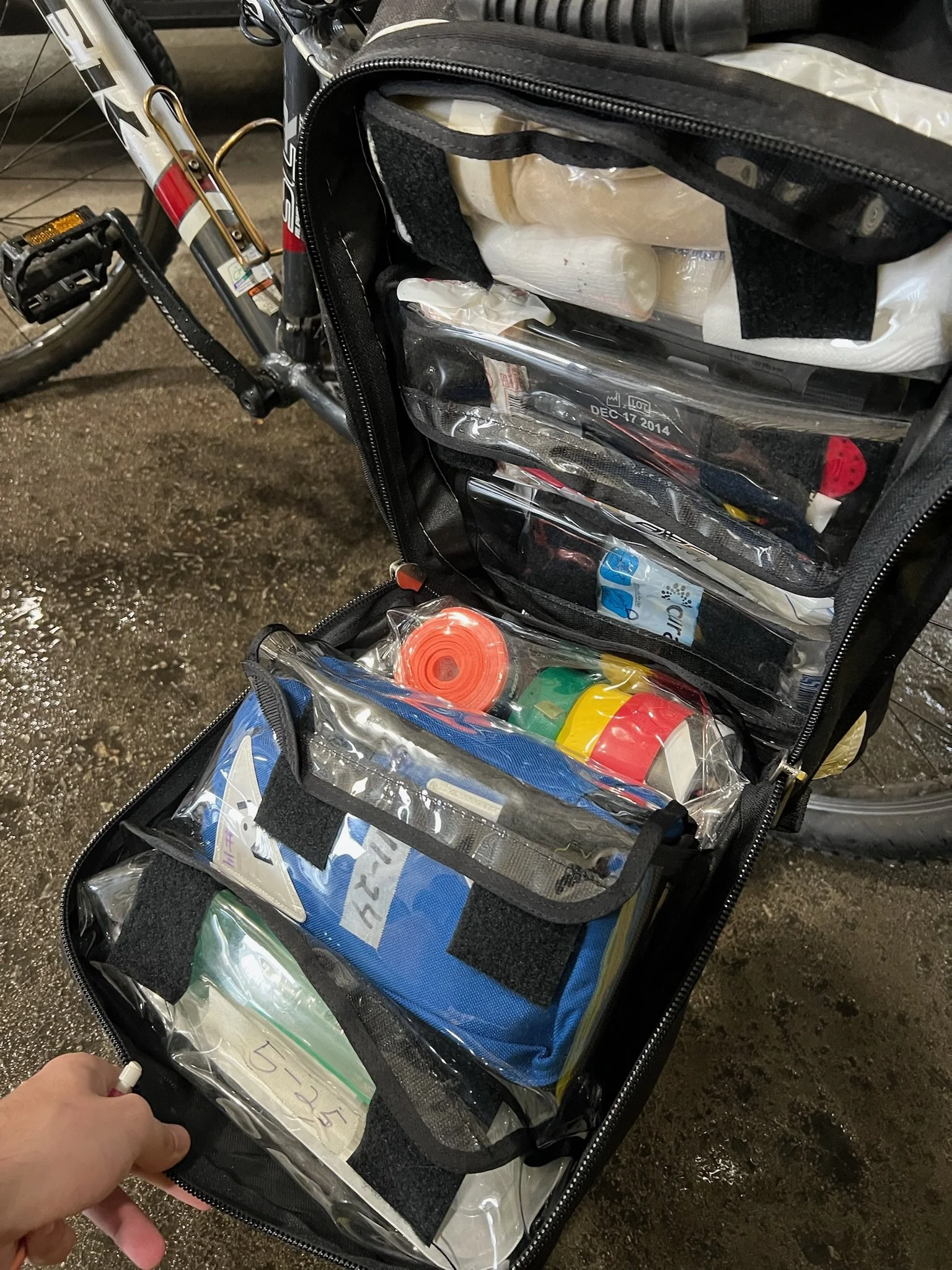
To work around limited vehicle access, EMS teams have increasingly turned to bicycles for rapid response. However, current EMS bike setups are adaptations of standard bicycles, not purpose-built tools. Equipment is often carried in belts, vests, and backpacks, creating balance and weight-distribution issues. Critical gear can be slow to access while riding, and bikes lack the communication, visibility, and locator technology integrated into traditional emergency vehicles.
This project focuses on designing a dedicated EMS response bicycle that integrates storage, technology, and ergonomics from the ground up—ensuring responders have the tools, stability, and mobility needed to deliver care effectively in large, crowded environments.
Research
Before identifying a specific user group, we needed to understand how people interact with bikes in the real world. Bikes serve commuters, recreational riders, delivery workers, and many niche groups, all with different needs, constraints, and values. To design something meaningful, we first had to study these behaviors in context.
Get image of ponce or bikes.
To uncover both conscious and subconscious user behaviors, we used a broad research toolkit:
47 survey responses to identify quantitative patterns
19 interviews to capture personal motivations and frustrations
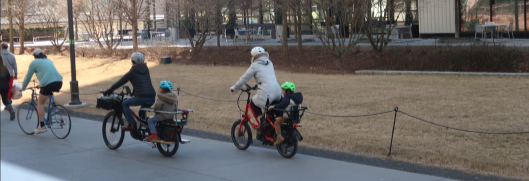
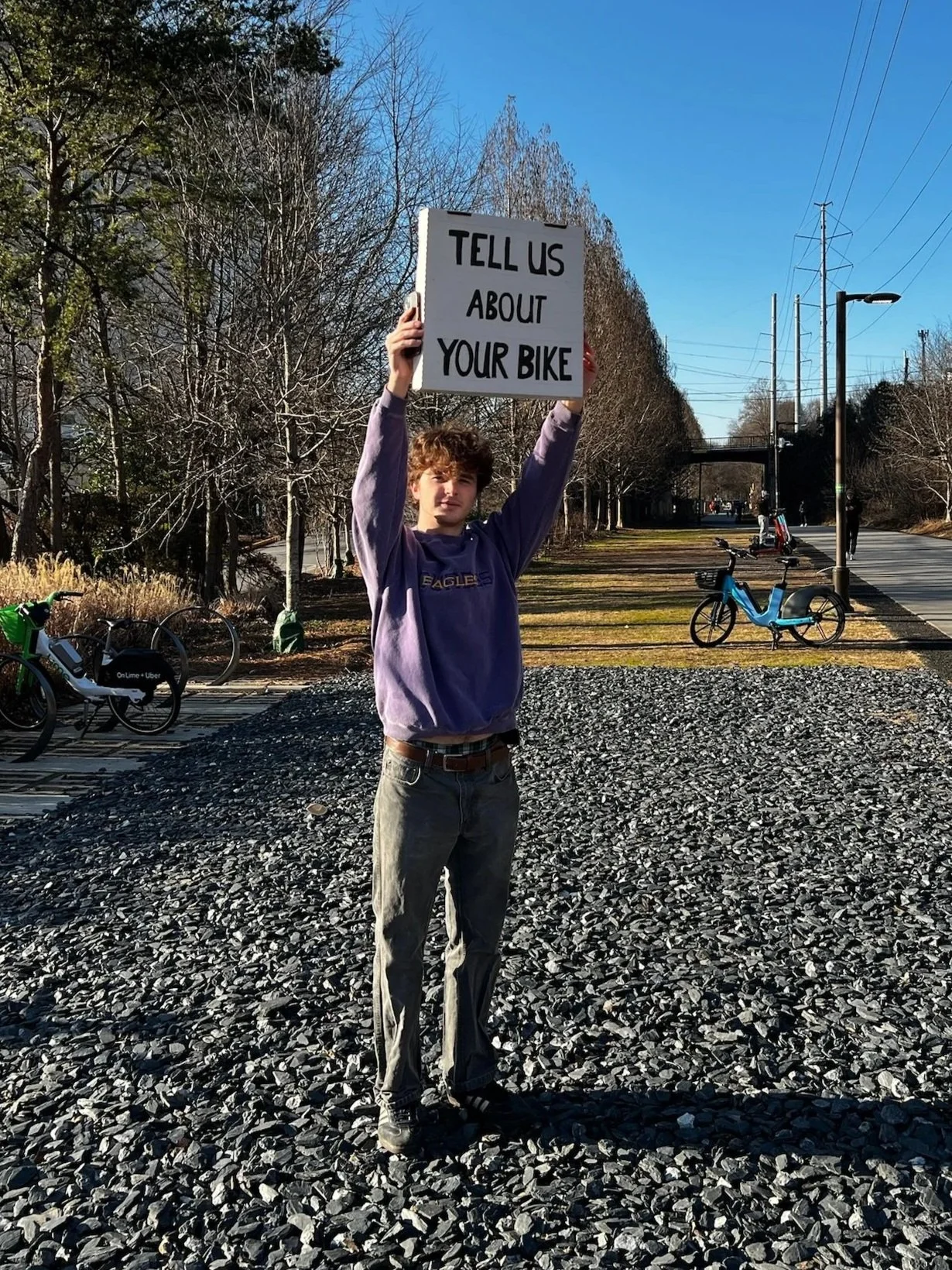
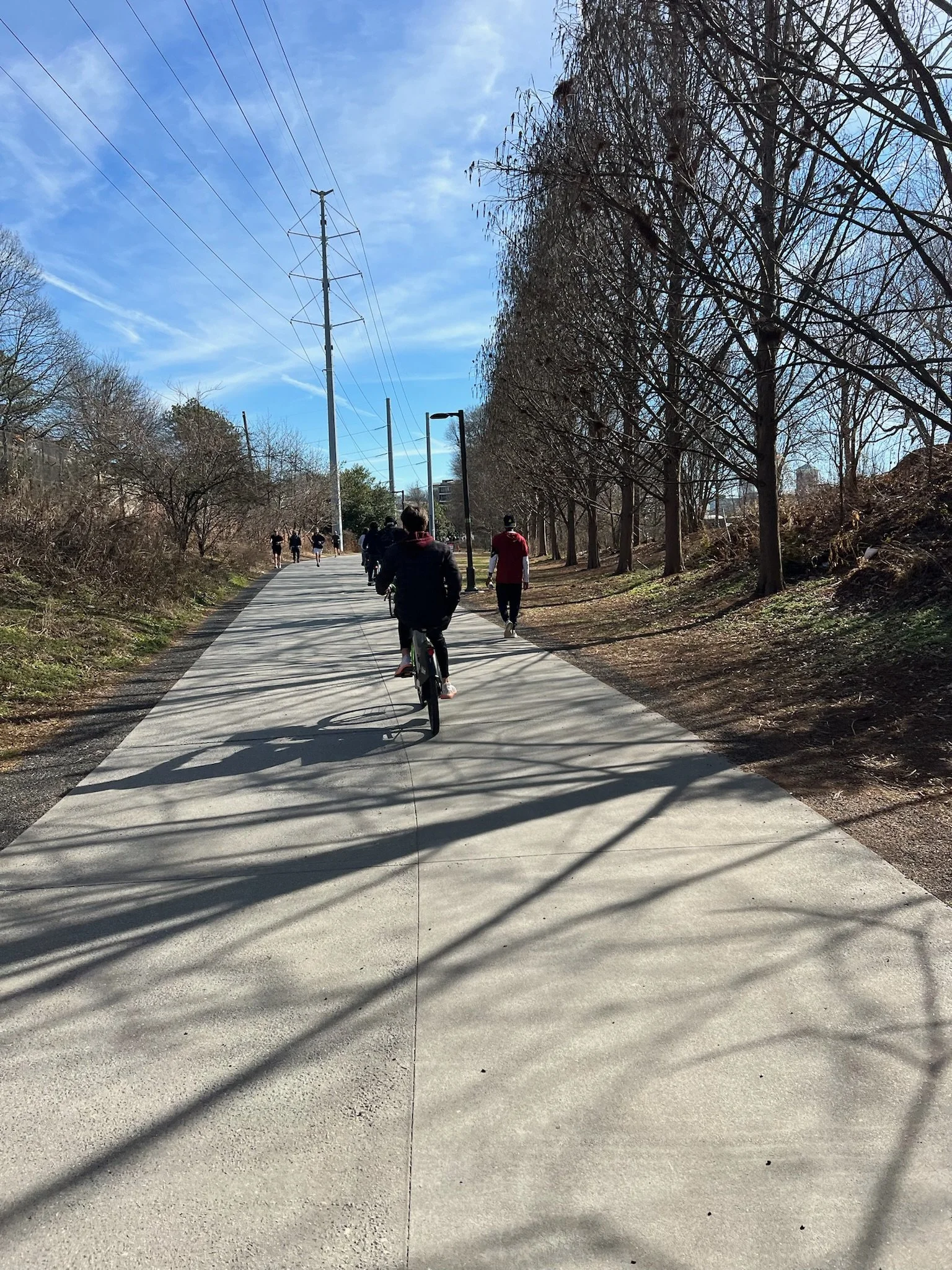
3 hours of observational research on the Atlanta Beltline to understand behaviors riders don’t verbalize
Supporting methods: mind mapping, personas, journey mapping, market/trend/tech research, and contextual analysis
Together, these methods helped us see what people say, what they do, and what they value—three things that rarely align perfectly.
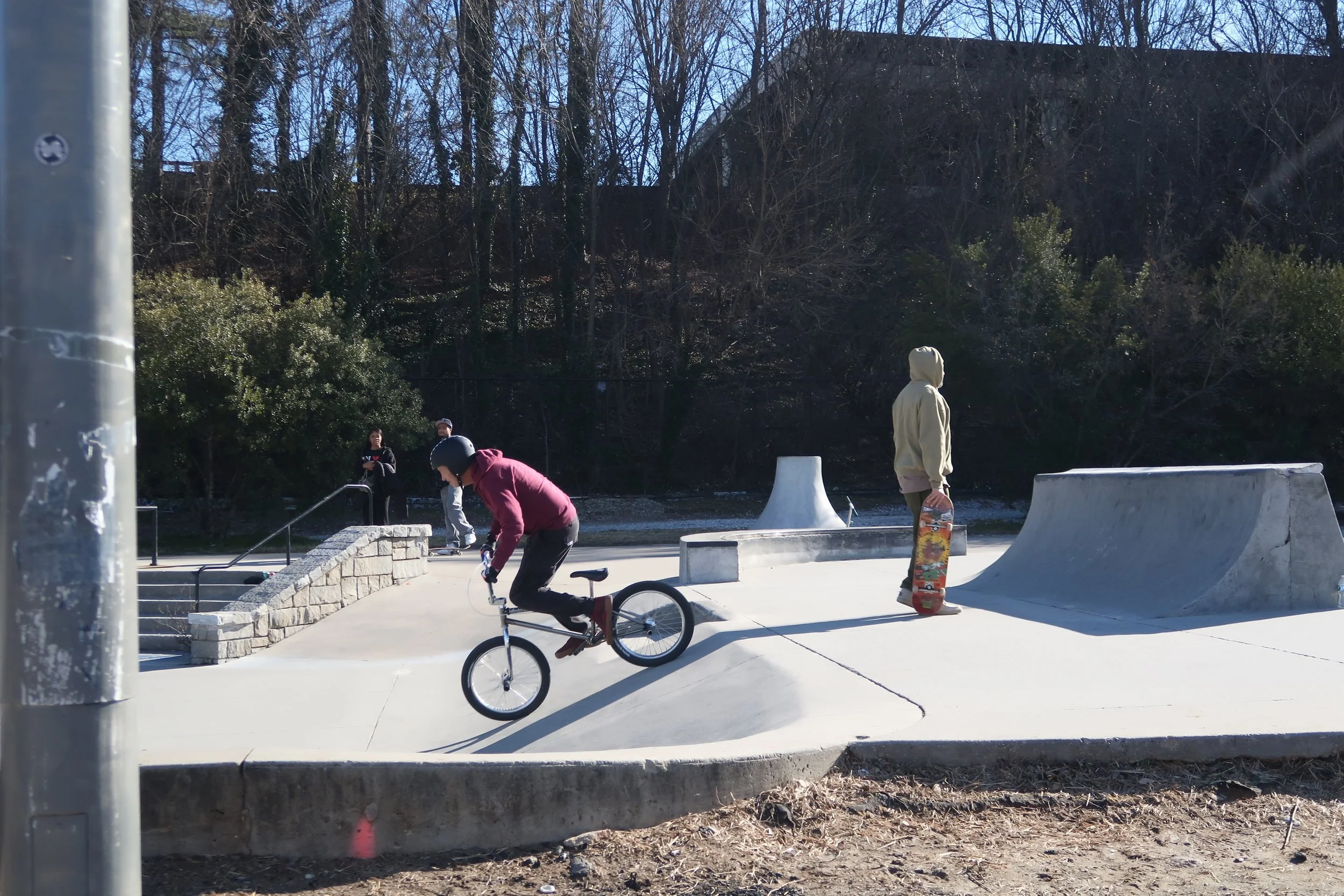
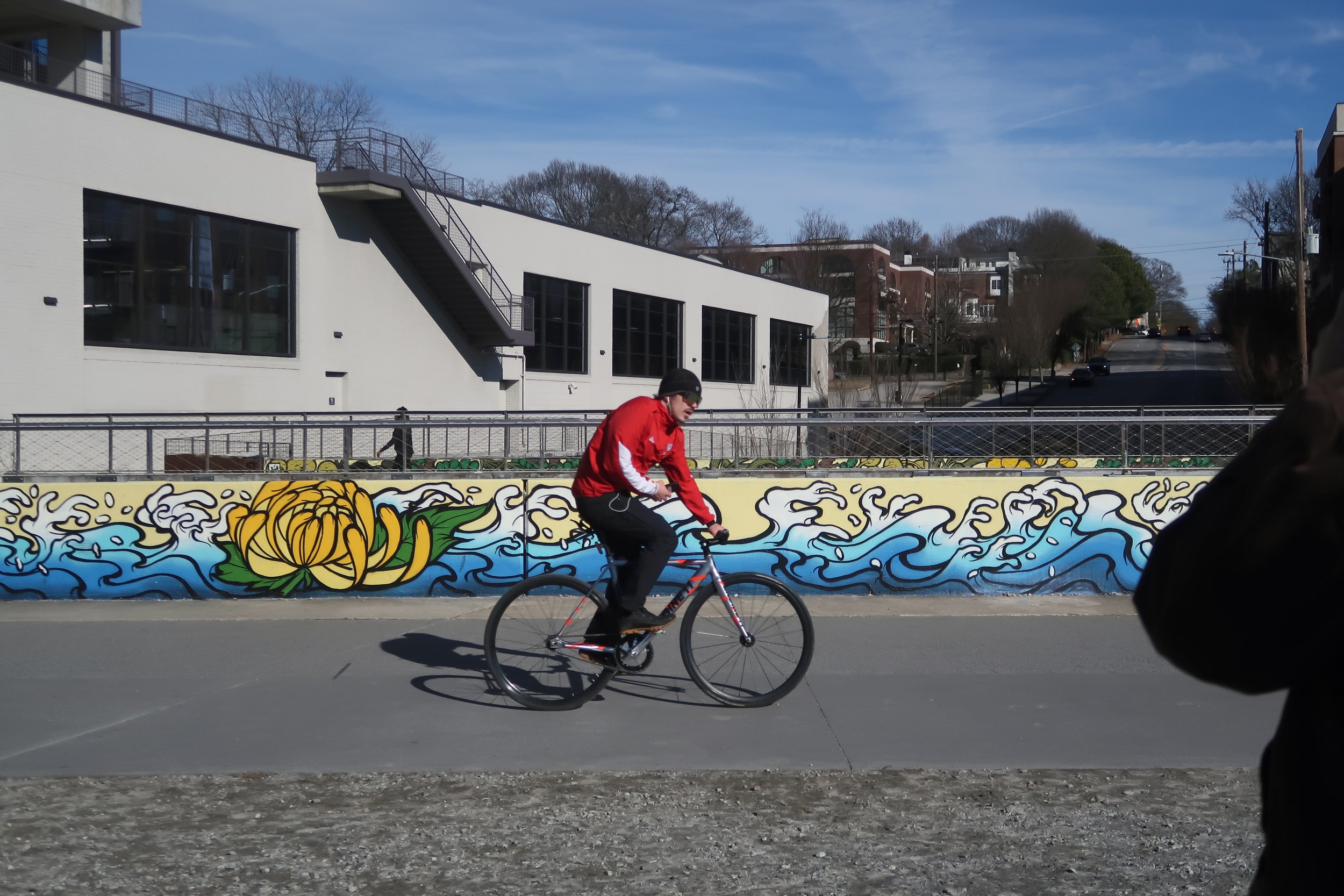
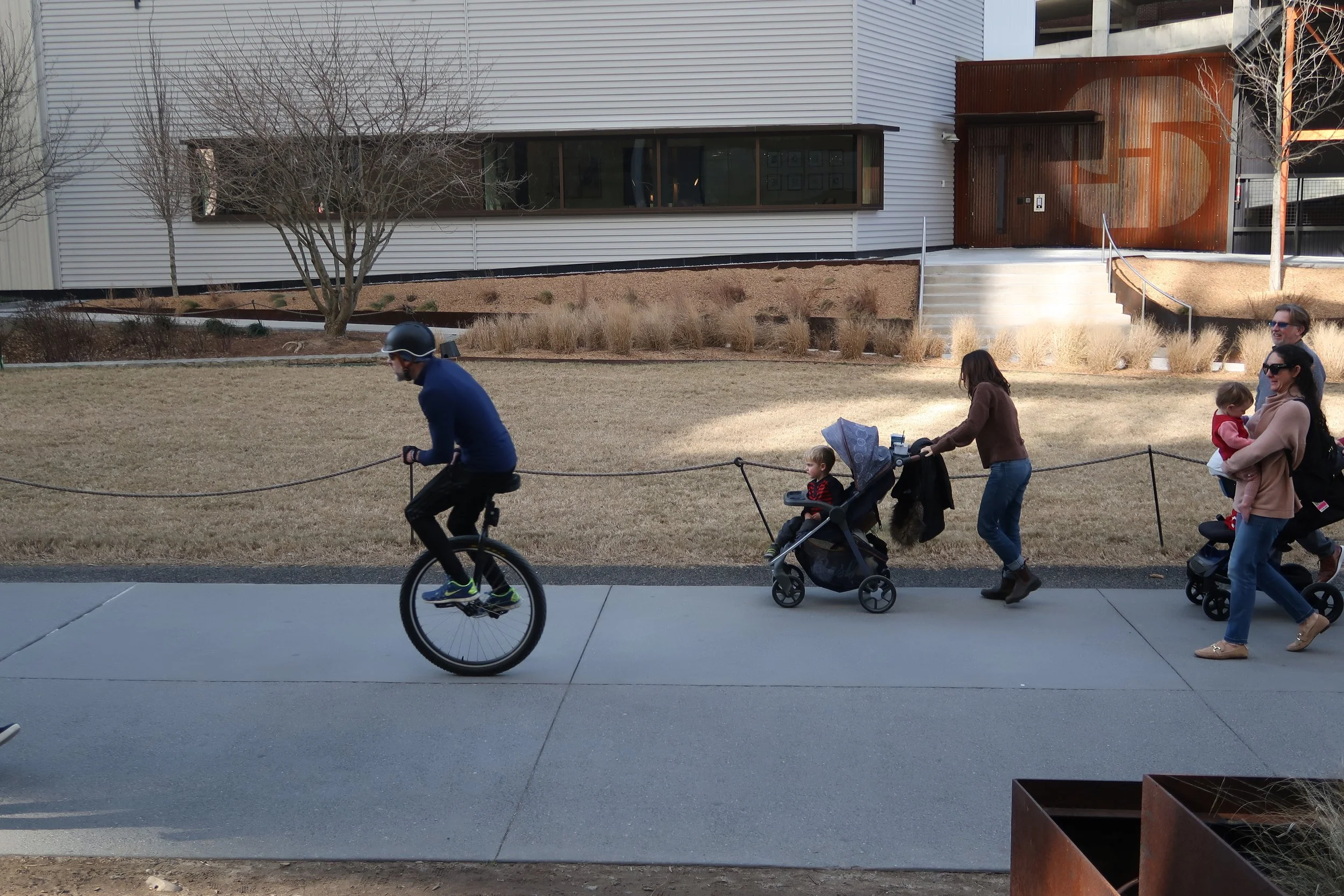
We began our observations at the Beltline in Atlanta From a station near Ponce City Market, and later at the skate park, we documented:
Which bike types people rode
What accessories they added
How they navigated terrain
How they stored or accessed items while riding
How confident they looked handling their bikes
Key Patterns We Saw:
Terrain dictates usability: Bigger wheels handled uneven surfaces better; smaller ones struggled.
Riders trust simplicity: Durable steel or straightforward frames felt more reliable and easier to maintain.
E-bikes are rising fast: But they introduce cost, weight, battery sensitivity, and maintenance tradeoffs.
People ride mainly for leisure: Theft risk, weather, and unpredictability discourage people from investing in better equipment.
These patterns helped us build a deeper understanding of rider psychology and the values people attach to their bikes; however, none of us fully understood the e-bike trend. So, to be empathetic designers, we rented Bird and Lime e-bikes.
Once we mind-mapped all user types, bike technologies, contexts of use, and rider values, a clear connection emerged. Some cyclists needed bikes not just for recreation or commuting, but for performance, safety, and rapid response in challenging environments.
This intersection—high utility + high stakes + underserved needs—pointed us toward:
First responders.
Police, EMS workers, campus patrol, security staff, and even some firefighters rely on bikes in crowded, unpredictable environments where cars cannot go. Their needs aligned perfectly with the patterns we found in early research.
Identifying this overlap allowed us to shift our focus from general riders to those who depend on bikes as critical tools, not conveniences.
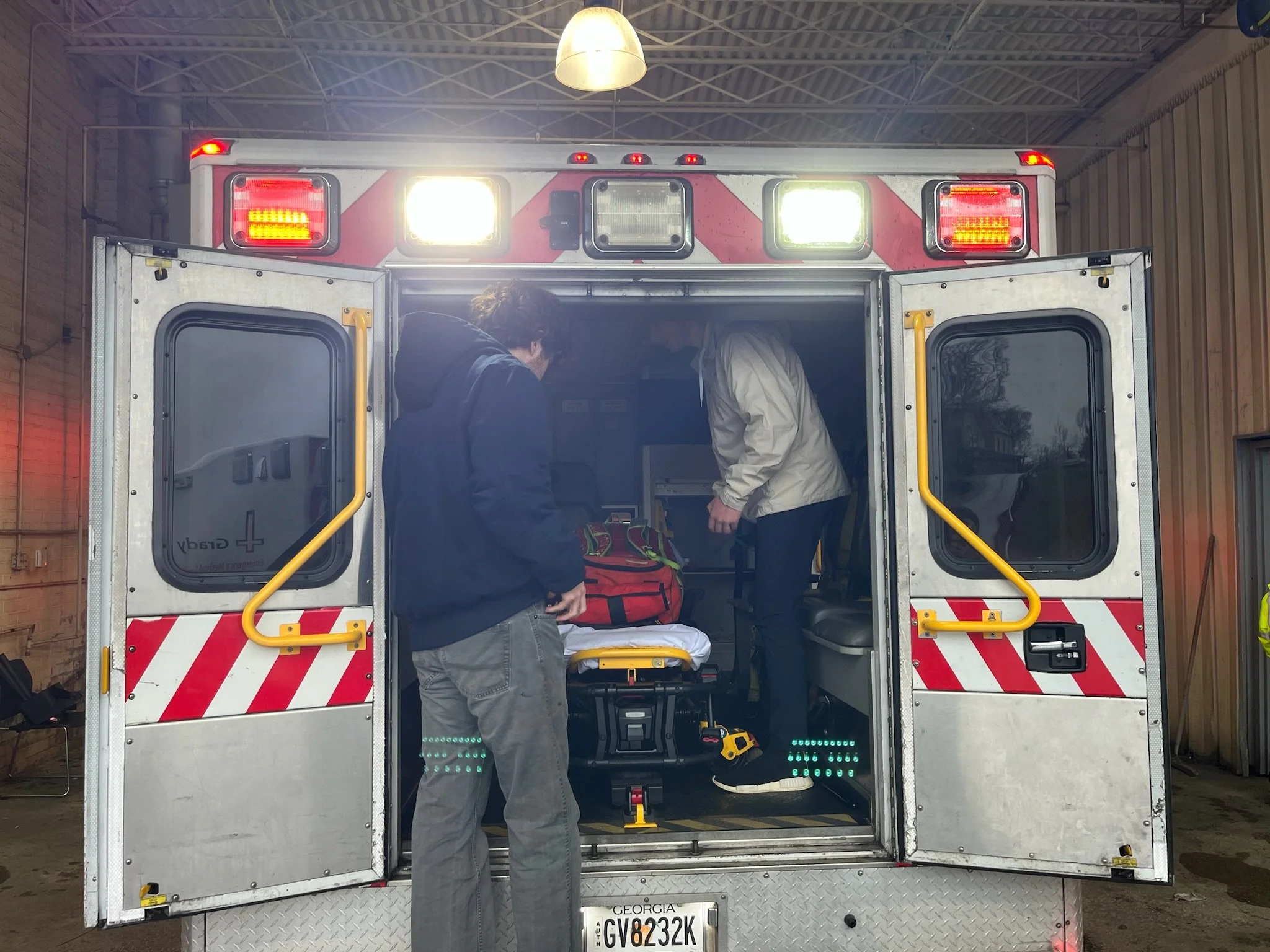
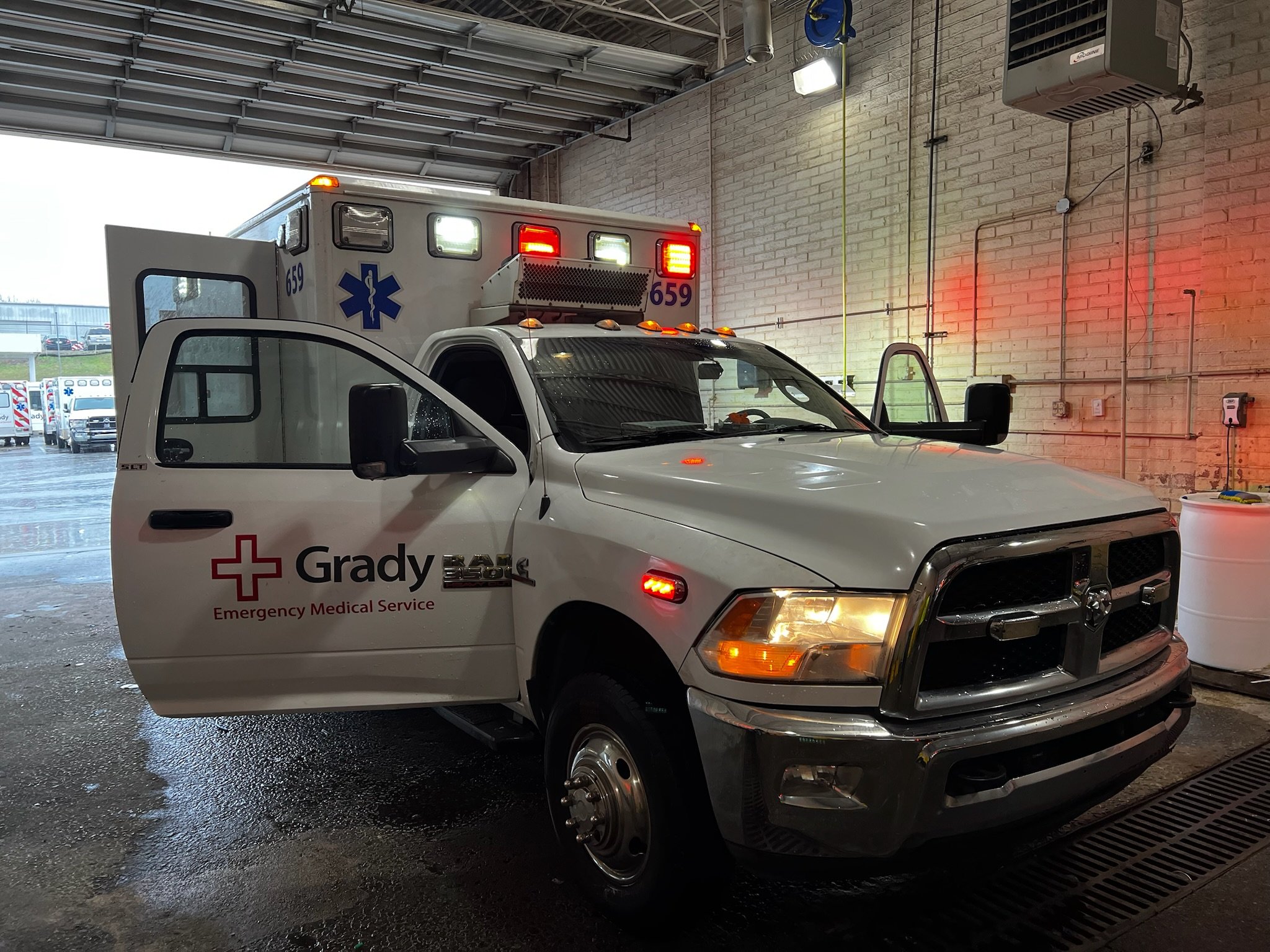
To understand their realities, we worked closely with Grady Hospital EMS, Athens EMS, and Georgia Tech Police Department, spending full days interviewing, observing, and shadowing them in their actual work environments. This allowed us to see the constraints of their jobs first hand.
Ethnographic Research at Grady EMS
We spent an entire day embedded at the Grady EMS/ambulance hub, conducting ethnographic interviews, photographing equipment setups, and studying how EMTs move, prepare, communicate, and respond. Because none of us have medical backgrounds, we approached this work with the intent to simply understand their world—its pressures, urgency, and constraints.
Across interviews with EMS workers from both Grady and Athens, we sought clarity on:
Where crowd-dense emergencies occur?
How EMS respond when ambulances can’t reach a patient?
What equipment is essential for life-saving care?
What protocols dictate their actions?
Their biggest risks, delays, and frustrations in crowded spaces?
What bike response actually looks like today?
How they find patients in a dense crowd?
Whether bikes help, hinder, or change their workflow?
Even though EMS bikes are used more often than most people think, they are still an improvised solution—not a purpose-built tool.
Campus Patrol: Mobility + Crowd Management
To expand our understanding, we spoke with Georgia Tech PD, who regularly use bikes across campus, parks, stadium areas, and event spaces. Their bike use spans both calm patrol and high-pressure incident response.
We asked officers about:
Typical patrol environments
When/why bikes are chosen over cars, carts, or motorcycles
How they navigate greenspaces and festivals
Their protocols in emergencies
How they manage or direct large crowds
How they store, secure, and use their bikes during incidents
Times when vehicles couldn’t reach a scene
Vulnerabilities of their current gear setups
This gave us the security + navigation perspective, complementing EMS’s medical workflow.
Findings— Versatility Enables Rapid Response
A bike isn’t just a vehicle—it’s an adaptable response tool.
In crowded events, responders constantly switch between riding, weaving, hopping off, running, carrying gear, and treating patients. A functional EMS bike must support movement and care, without slowing either down.
Analysis
design criteria
Mapping the Scenario: Personas + Journey Maps
To understand the entire response ecosystem, we created personas representing:
An EMT
A Public Safety Officer
A Special Events Coordinator
These personas allowed us to analyze how incidents unfold from multiple perspectives: medical response, crowd navigation, and event logistics.
We then developed journey maps for EMS, firefighters, and public safety officers, structured around:
Pre-event setup
During event (before incident)
During incident
Post-event wrap-up
This timeline exposed pain points that occur not just during emergencies, but across preparation, movement, communication, and equipment management.
Images to place here:
Clean persona snapshots
A simplified journey map graphic (not a cluttered Miro export)
Needs + Priorities: Qualifying the Pain
To identify what actually needs to be improved, we layered our journey maps with:
Maslow’s Hierarchy
Need Qualifiers
A Value Proposition Map
This allowed us to break down:
The jobs first responders need to complete
The pains created by current bike setups
The gains a better system must produce
The pain relievers and gain creators a new design must deliver
All of this translated into the core insights that drove our design direction.
Core Insights Driving Our Design
1. Systematic Rigidity
EMS bike units follow strict protocols to maintain accuracy and care.
But their environments are unpredictable.
The current bike system is rigid—it forces EMS workers to adapt to the bike, not the other way around.
A flexible bike system should support varied workflows, environments, and response styles.
2. Performance Strain
Bike units carry heavy gear and must deliver precise care on scene.
But current bikes only solve transportation—they don’t support medical performance.
This leaves responders with physical strain (weight, awkward access) and cognitive strain (navigating + locating + preparing equipment).
The bike should absorb both, so responders can focus on the patient.
3. Visual Ambiguity
Most EMS bikes look like regular bikes.
In crowds, people don’t notice them, don’t clear space, and don’t understand their authority.
Clear visual identity builds public trust, improves navigation, and reinforces safety.
Idea Generation
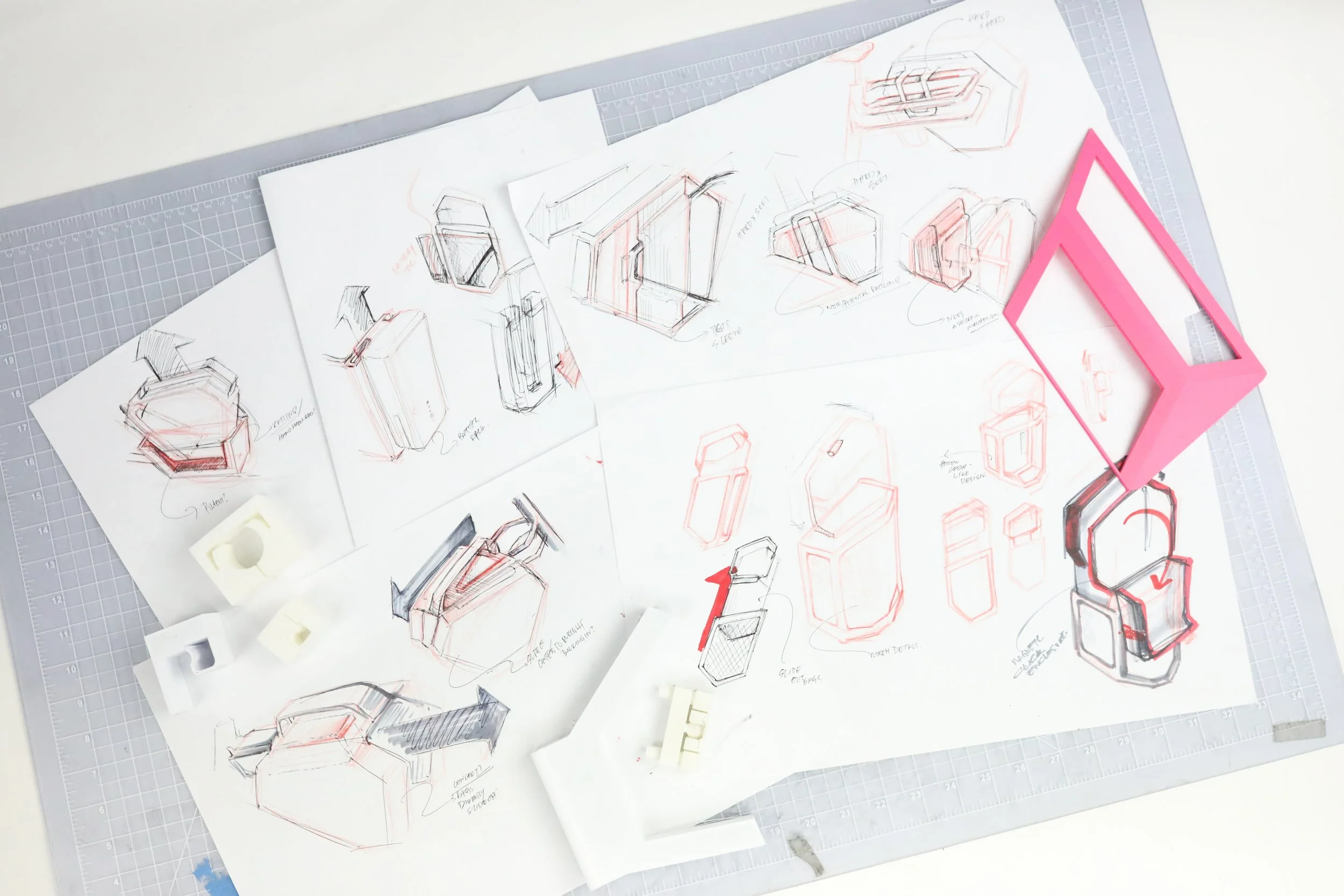
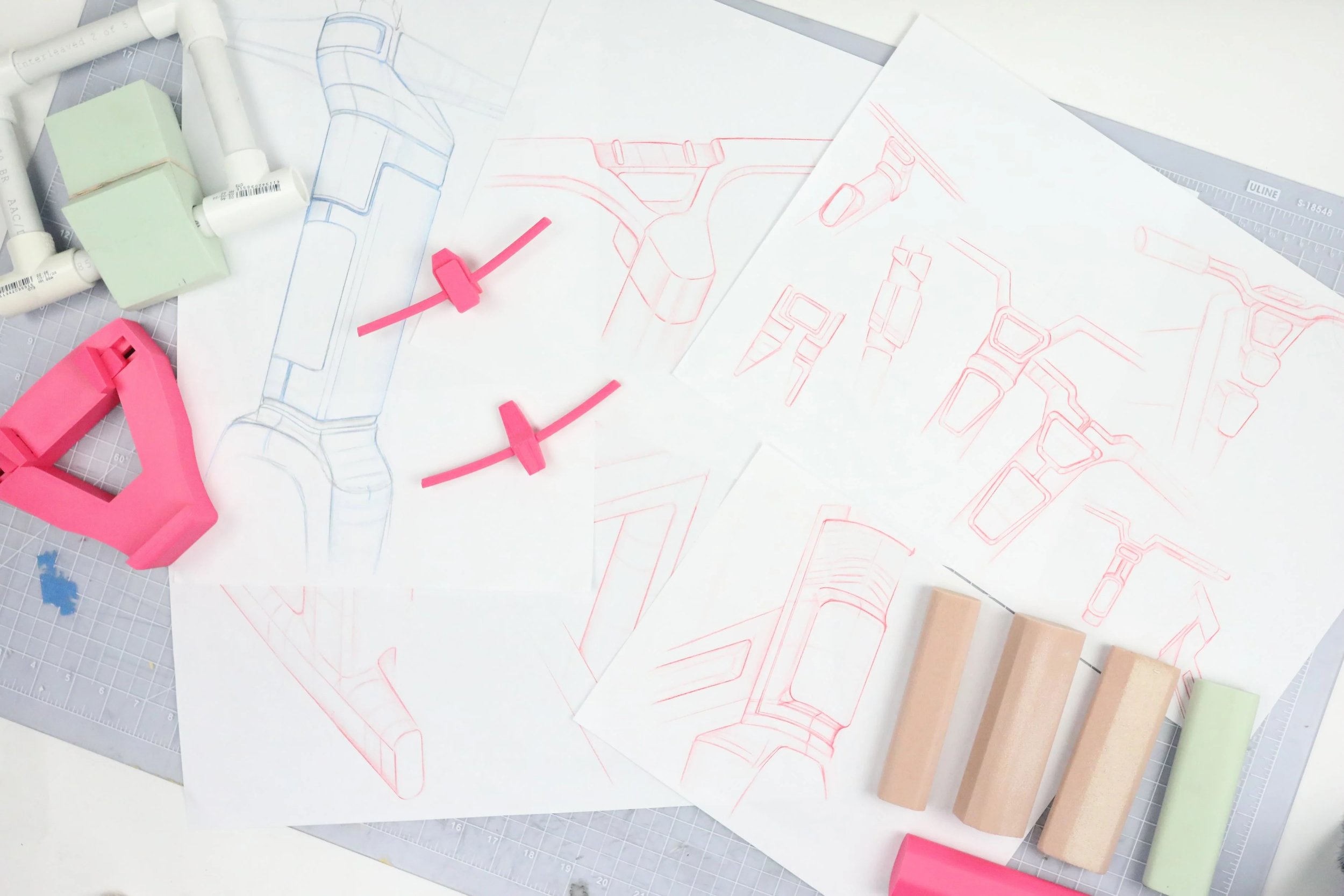
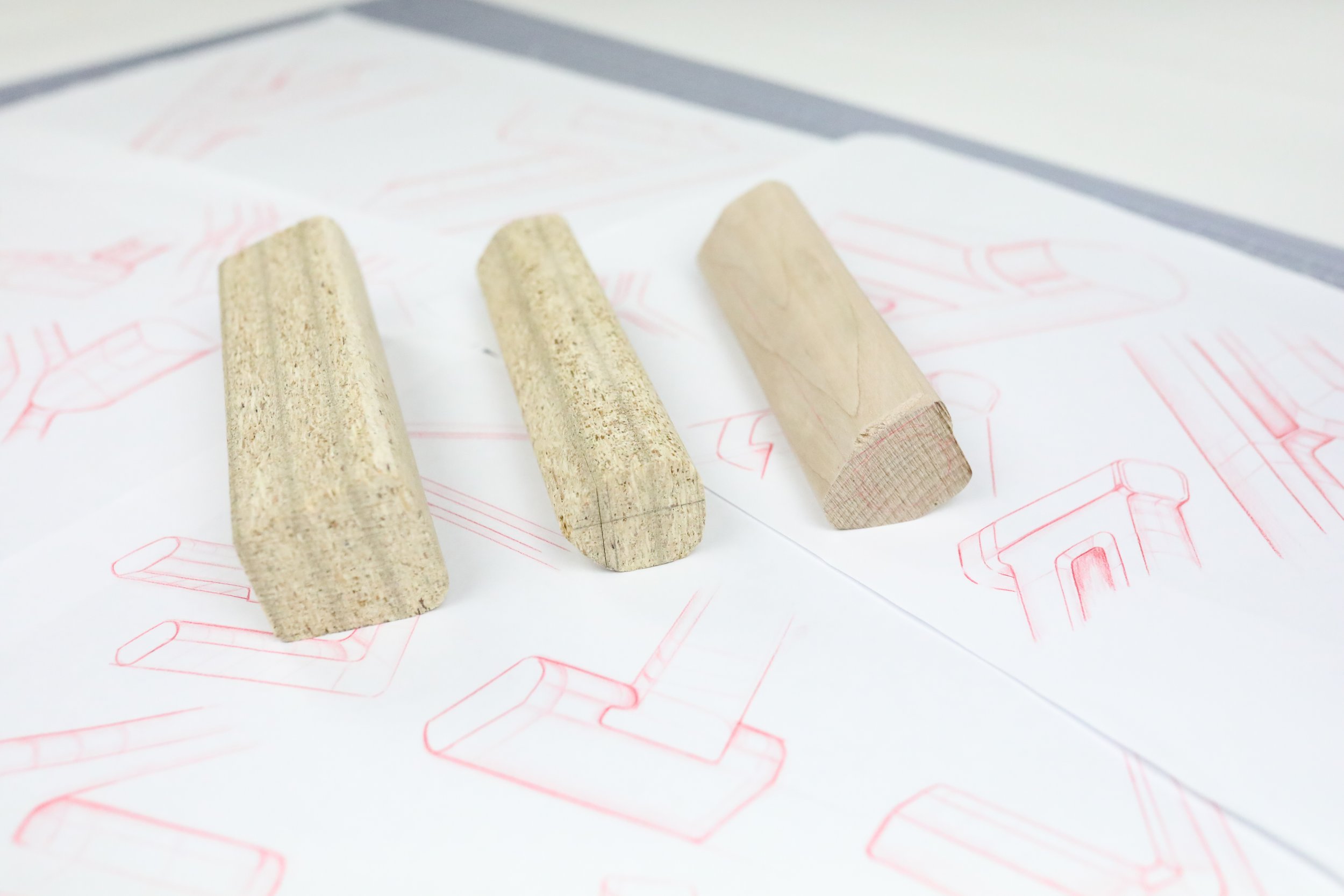
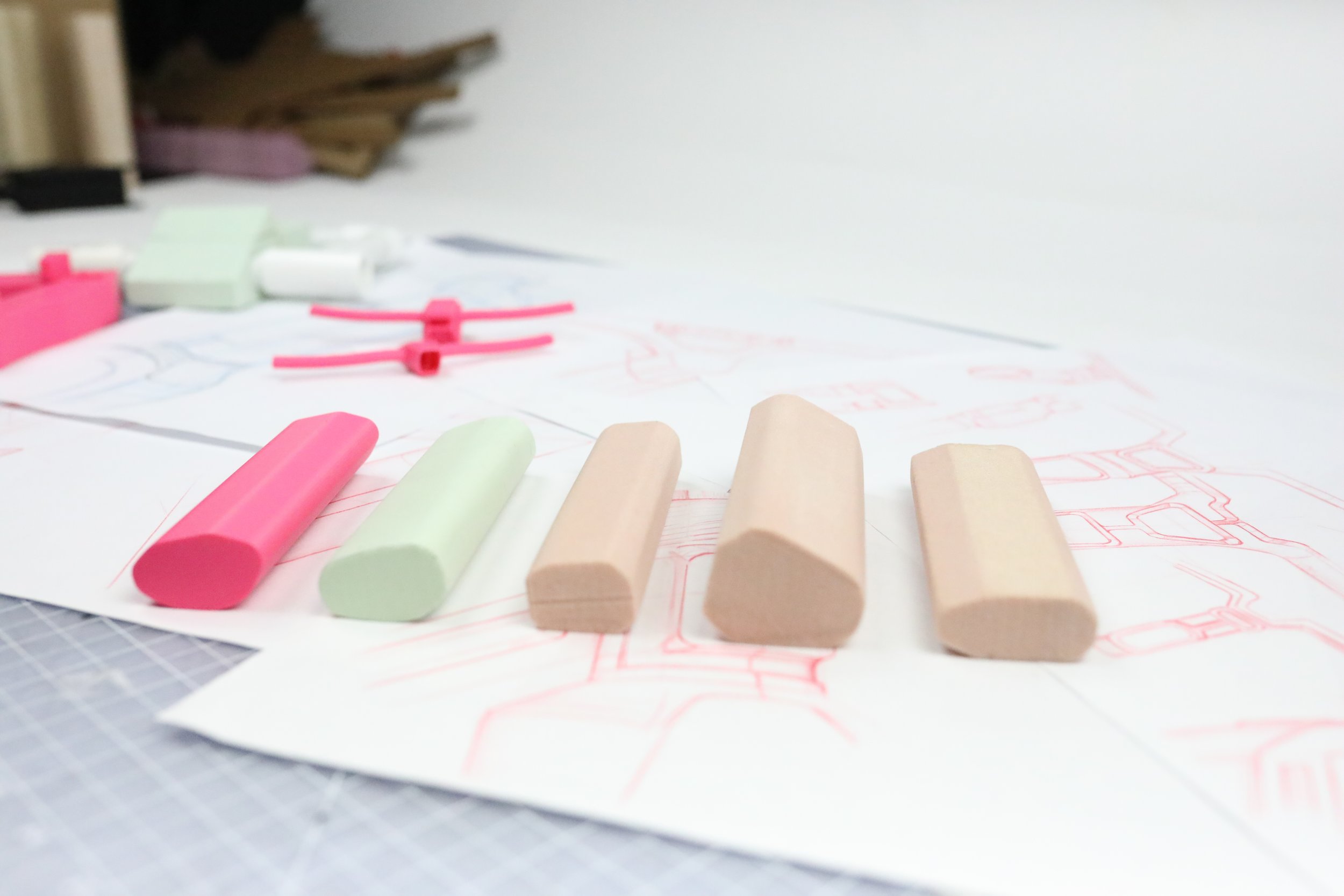
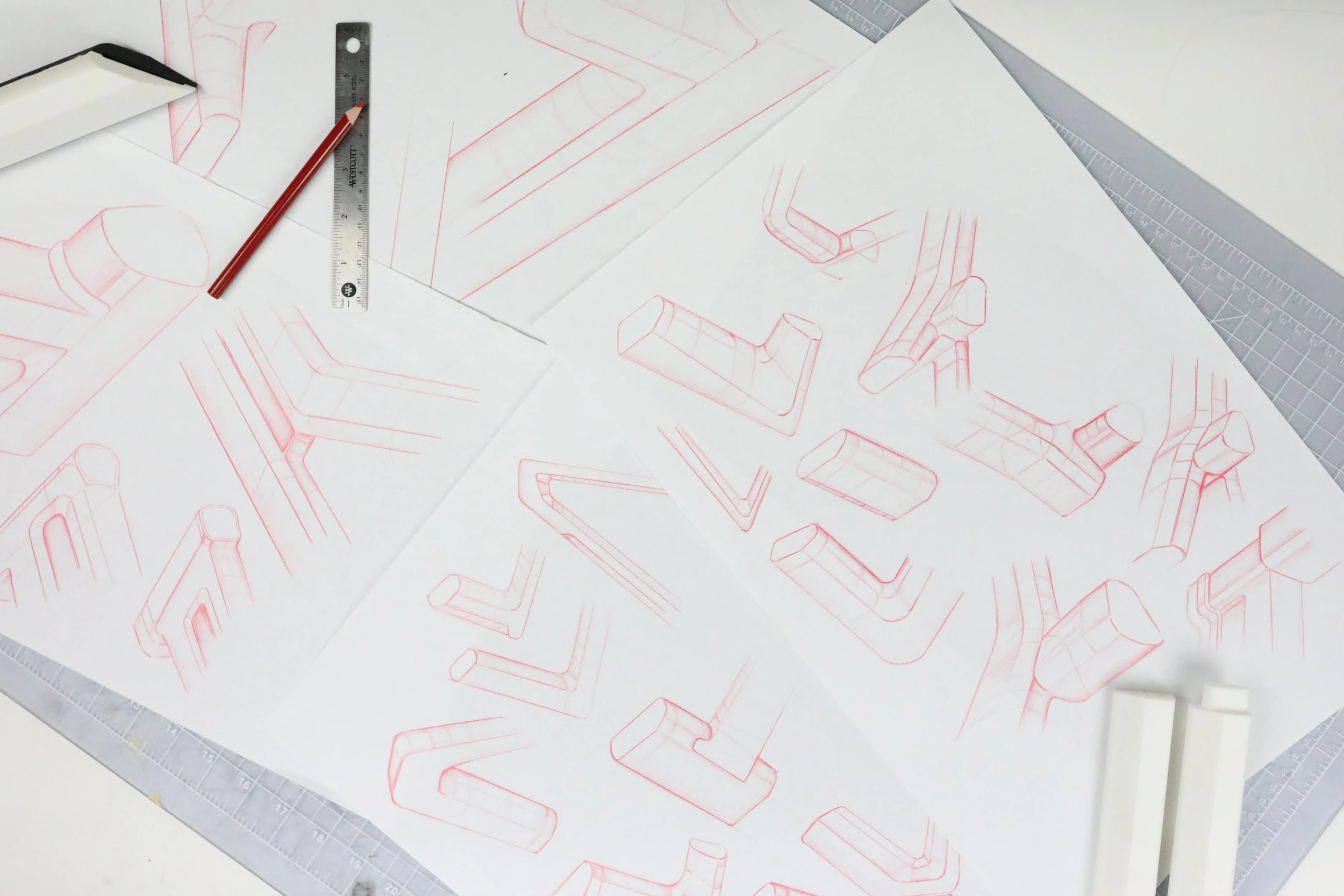
sketches
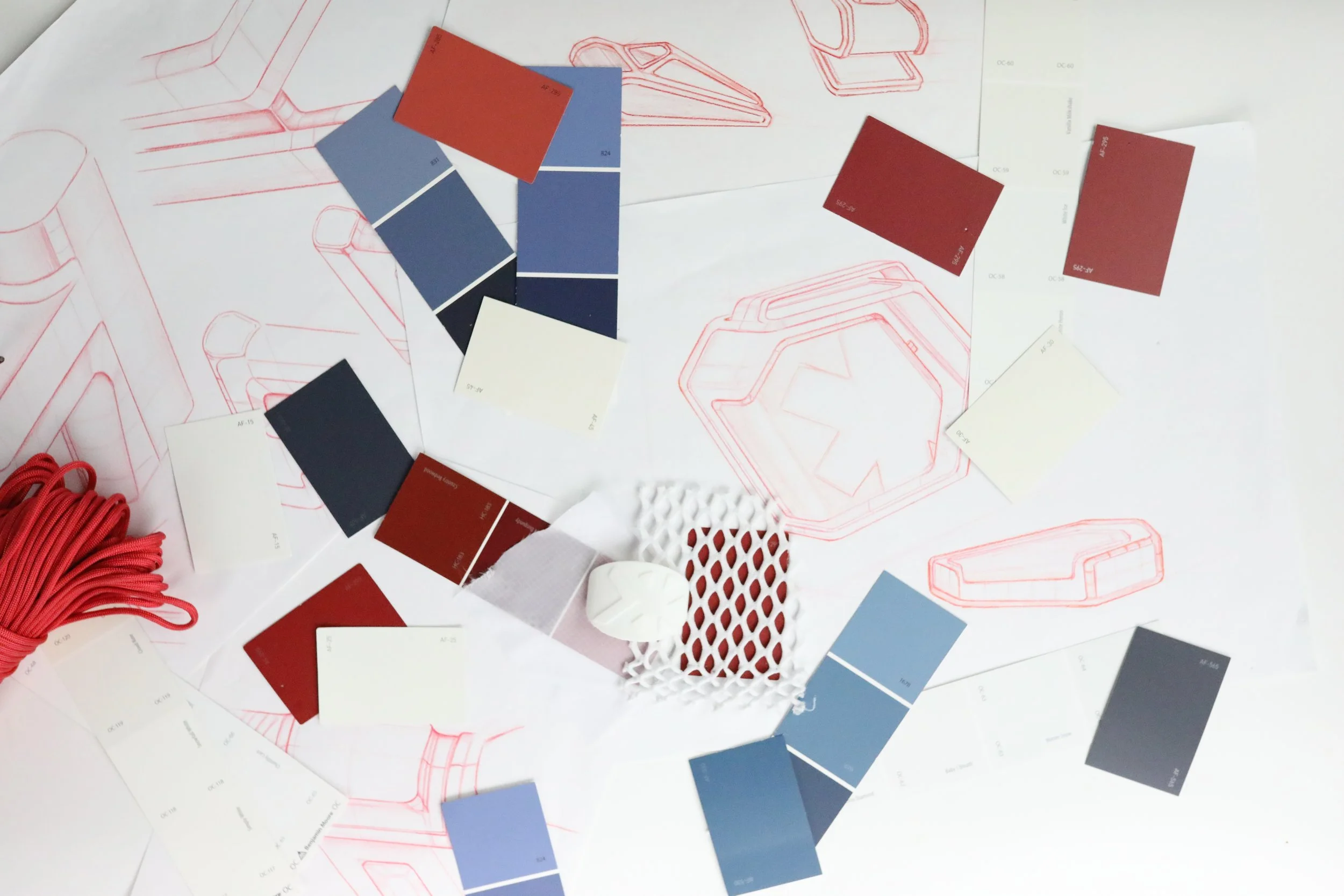
branding
Key Design choices
clip on cargo
different wheels
Design Criteria
After synthesizing our research insights, we translated the needs of EMS workers and patrol officers into clear design criteria. These criteria guided every decision moving forward and ensured the bike wouldn’t just transport responders, but genuinely support them in the moments that matter.
Must
Reduce physical strain by carrying weight more intelligently and minimizing off-balance loads.
Reduce cognitive strain by simplifying access to equipment, navigation, and on-scene transitions.
Enable workflow adaptability so responders can fluidly switch between riding, dismounting, navigating crowds, and treating patients.
Should
Be compatible with existing EMS systems and gear, ensuring seamless adoption without requiring replacements.
Increase identification and visibility, strengthening responder authority in crowds and improving public awareness of their presence.
Like to Have
Ease preparation and staging efficiency, allowing responders to gear up quickly before an event.
Be easy to maintain and repair, acknowledging real-world wear and resource constraints.
Early Design Directions
With the criteria established, we explored a wide range of conceptual directions. Early idea generation focused on solving broad functional gaps identified in the research:
Enhanced visibility tools such as integrated lights, sirens, and 360° identification systems.
Integrated device mounts to support navigation, patient tracking, and communication.
Balanced storage systems that distribute weight evenly and allow rapid removal when transitioning into on-foot response.
Modular compartments and panniers tailored to typical EMS gear footprints.
Improved rail or sled systems for removing medical kits without forcing awkward upper-body reaches.
Reinforced frames and utility-based geometries to support heavier loads without compromising maneuverability.
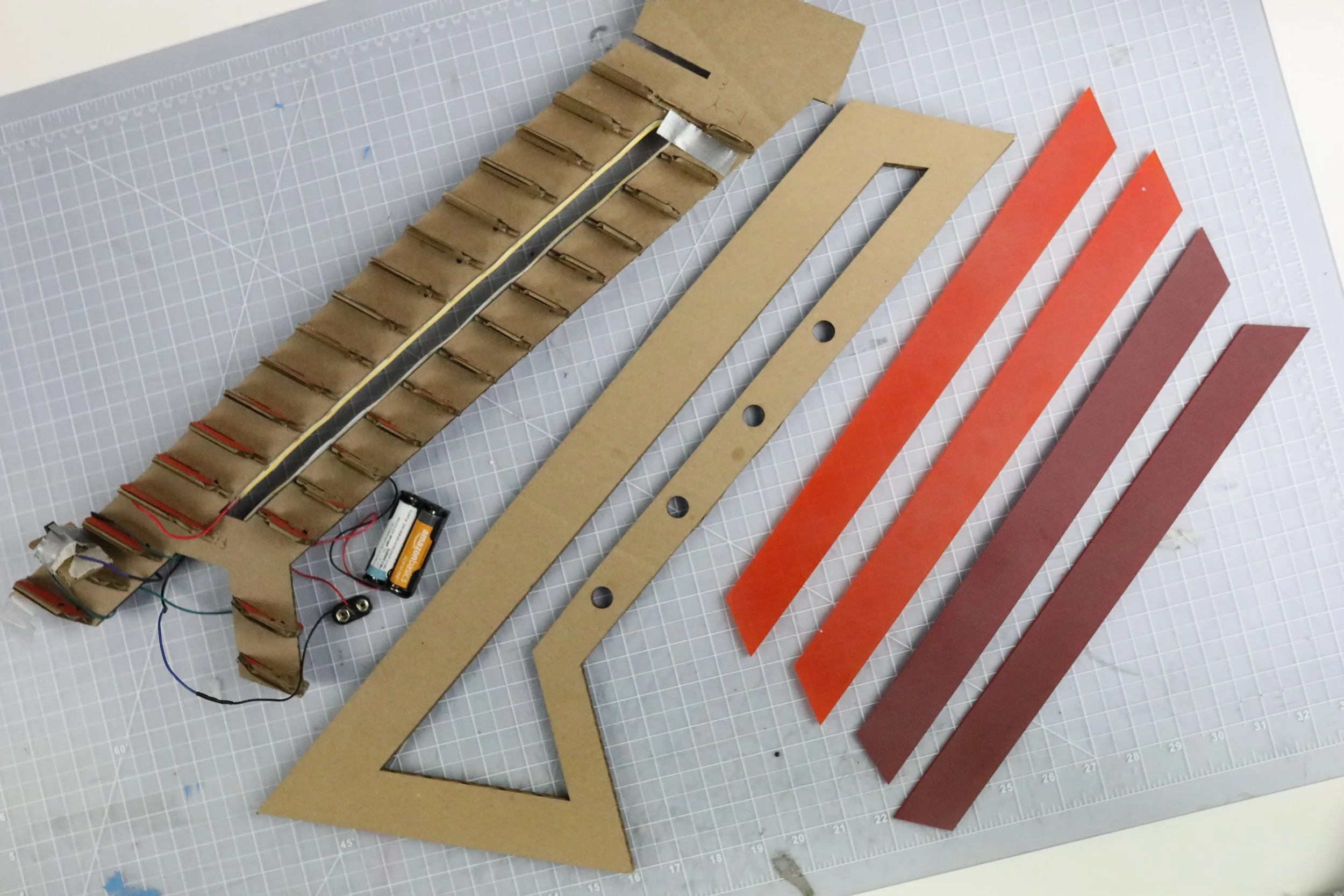
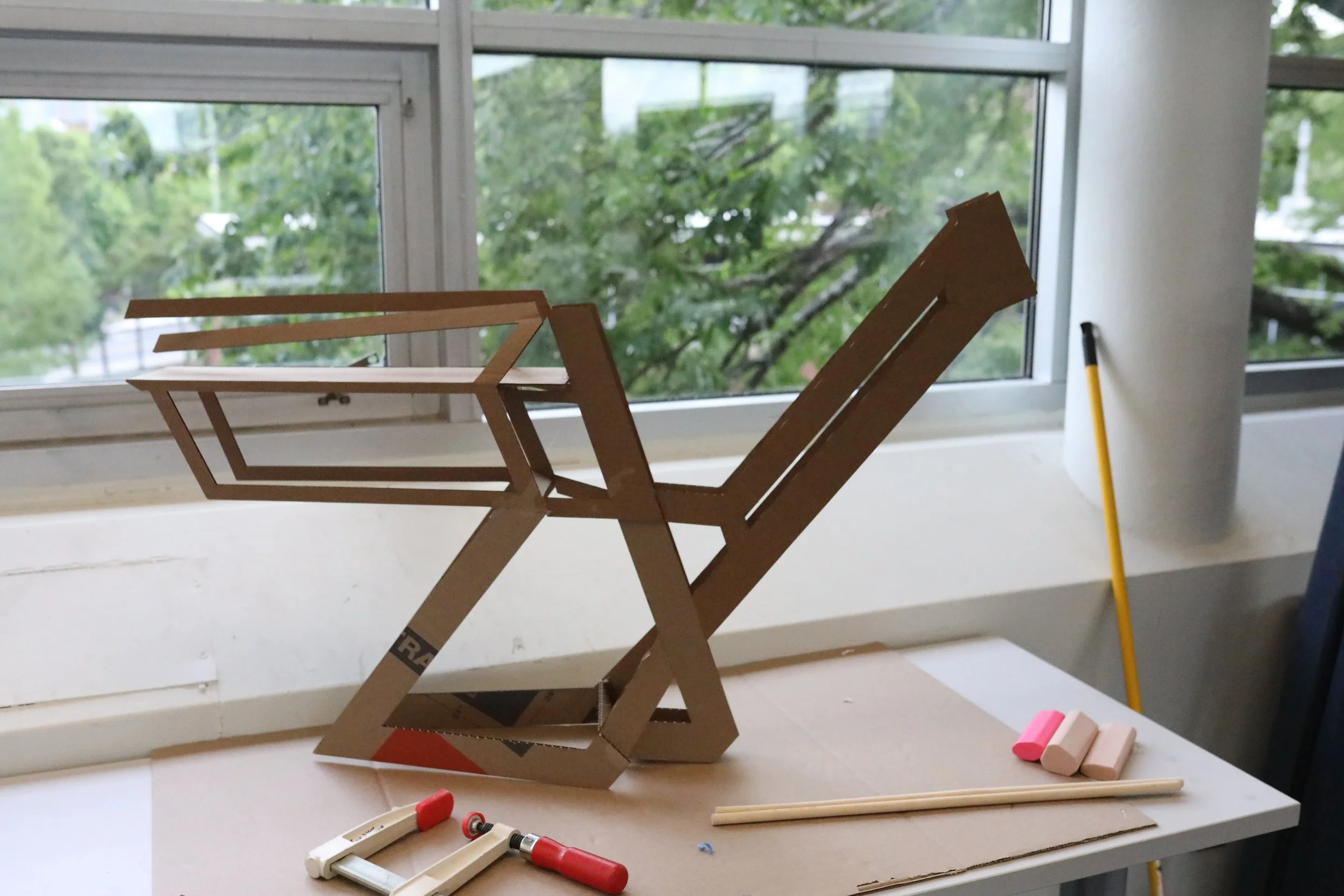
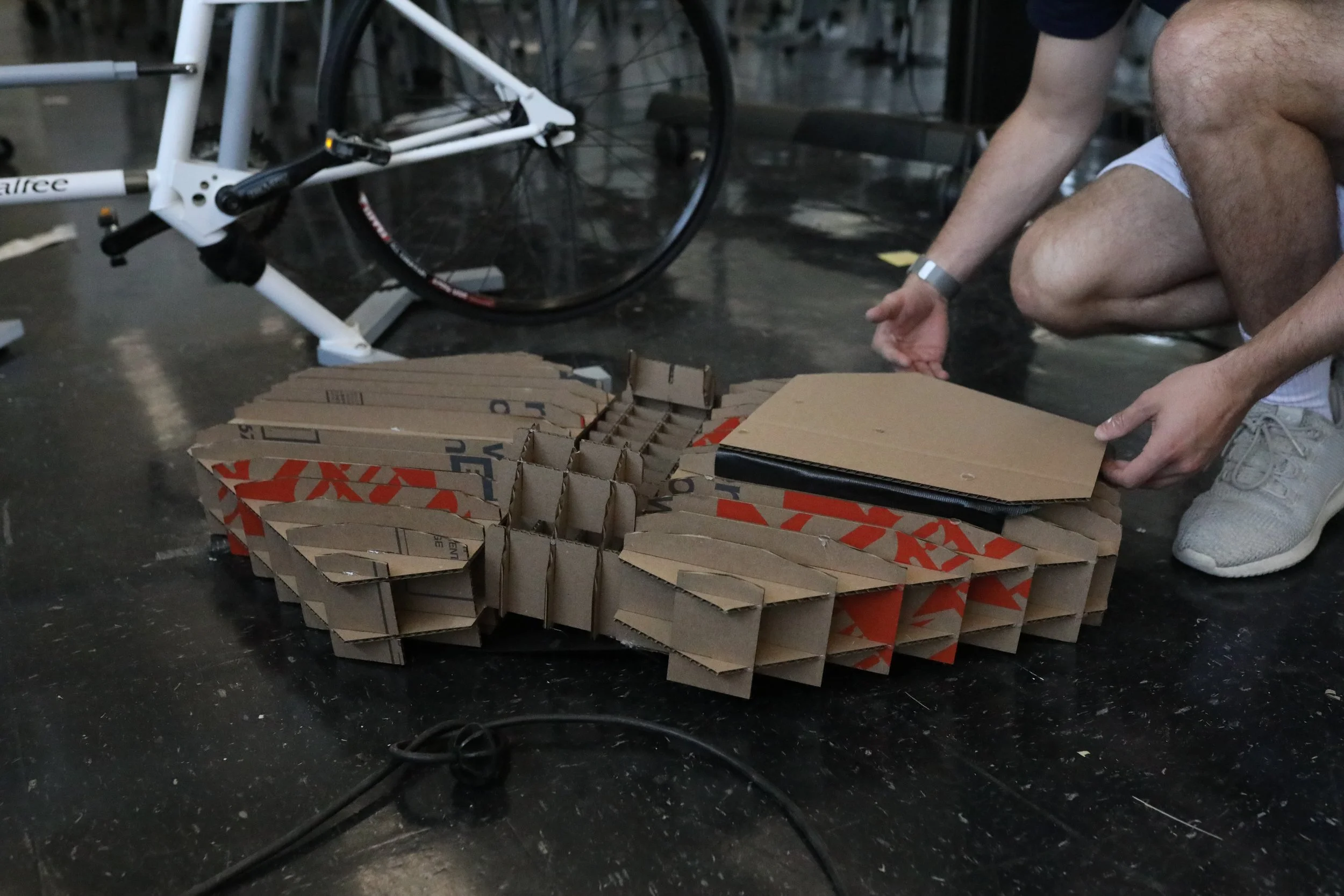
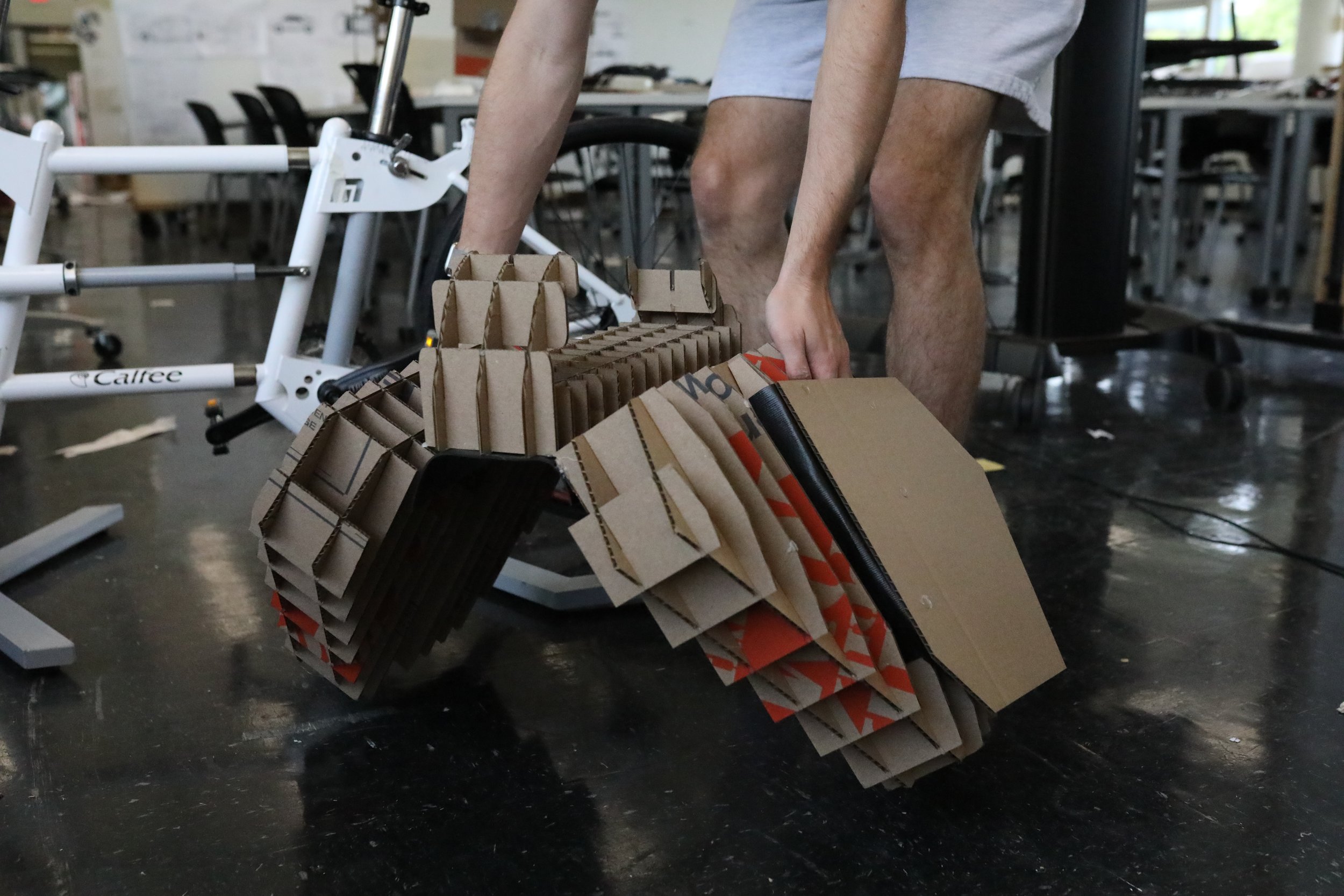
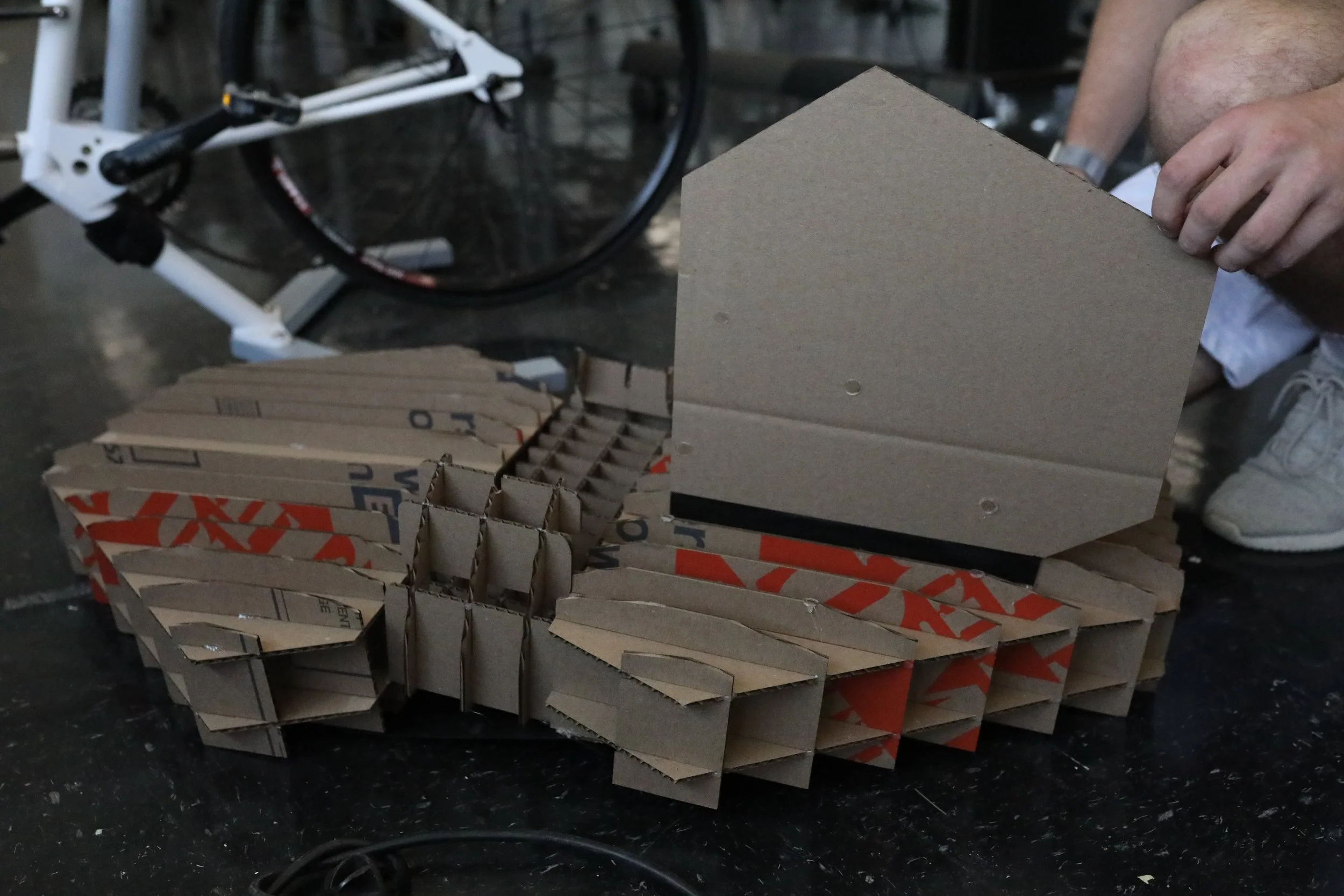
These broad concepts allowed us to test everything from ergonomics to workflow timing. Through sketches, mock layouts, and quick cardboard models, we evaluated what helped responders work smarter, not harder.
Key Final Design Decisions
Through iteration, field feedback, and usability priorities, several design directions emerged as non-negotiables for the final concept:
Step-through frame
Allows fast, stable mounting and dismounting — especially critical in dense crowds or uneven terrain where responders need quick transitions.Asymmetric wheel sizing (two different wheel sizes)
Improves maneuverability in tight spaces while maintaining stability when carrying loaded equipment.Clip-and-rail storage system
A slanted rail paired with a secure clip mechanism enables medical bags and gear modules to slide off smoothly during an emergency, reducing fumbling and lifting strain.360° lighting and identification
Full perimeter visibility ensures responders can be seen and recognized from all angles, improving crowd navigation and signaling urgency without relying on sirens alone.
Together, these decisions shaped a bike platform tailored to the realities of emergency response in crowded environments—not just transporting equipment, but actively supporting the work and wellbeing of the people who use it.
Prototype:
CAD
Model Building in cardboard
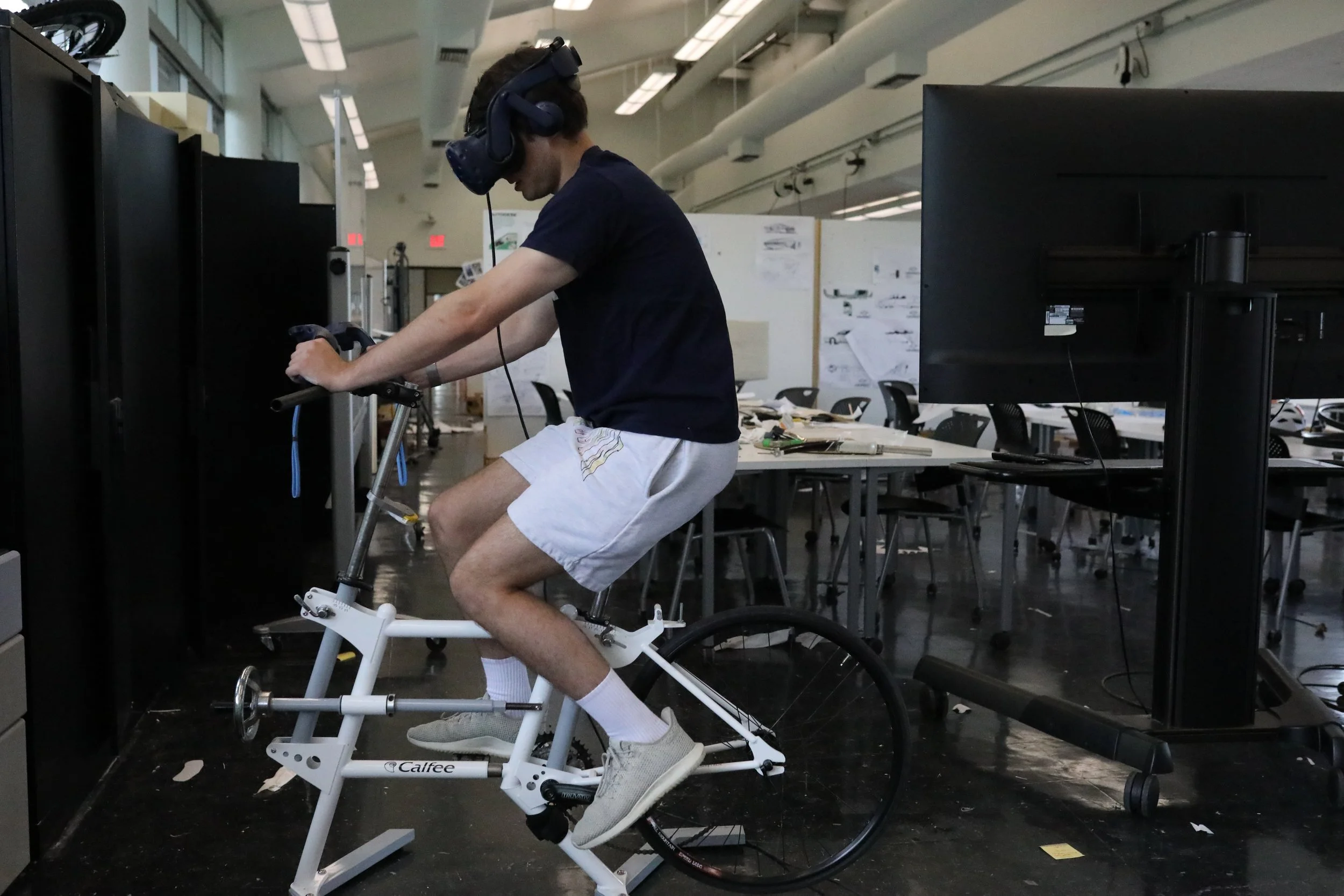
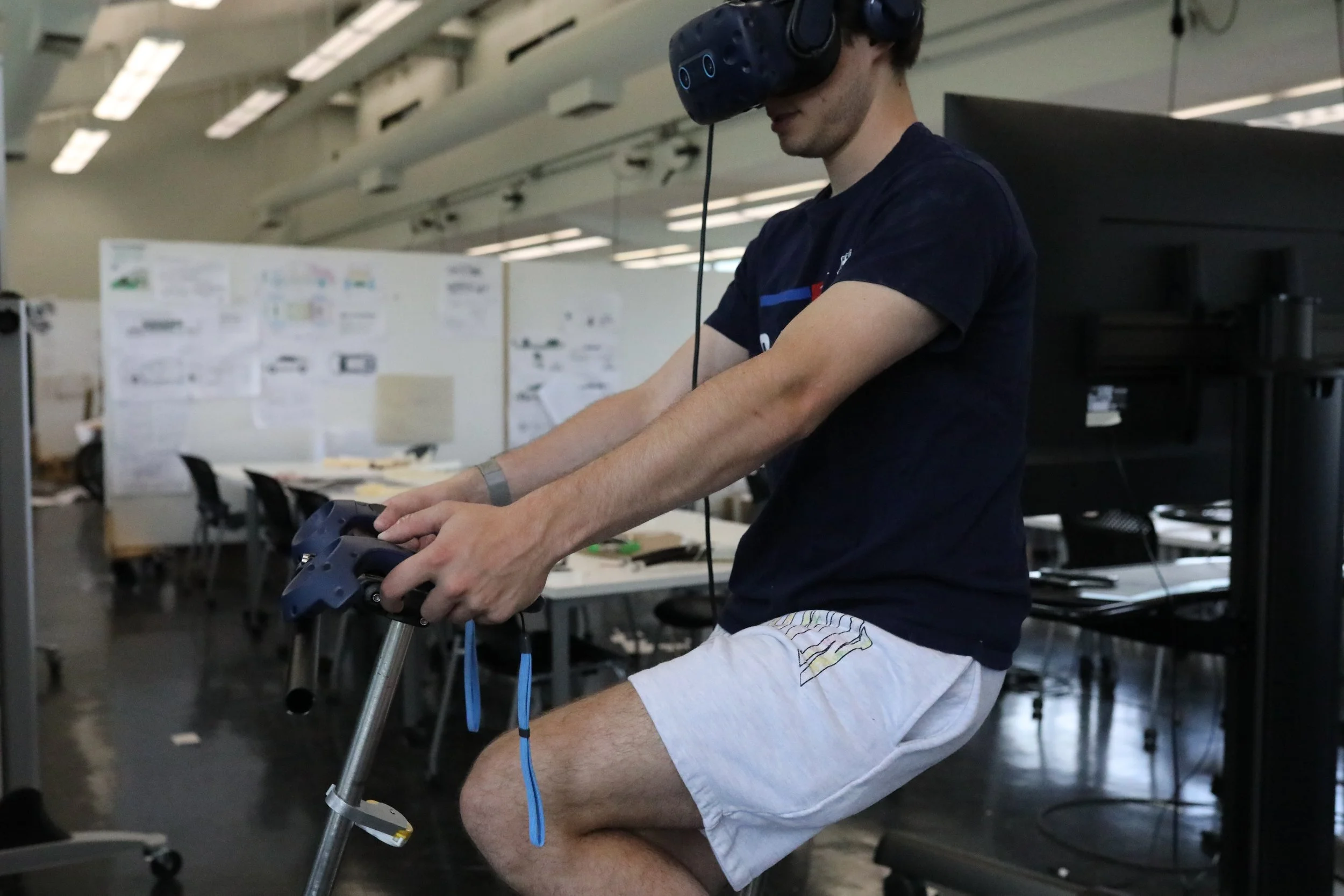
VR Testing
Final Building