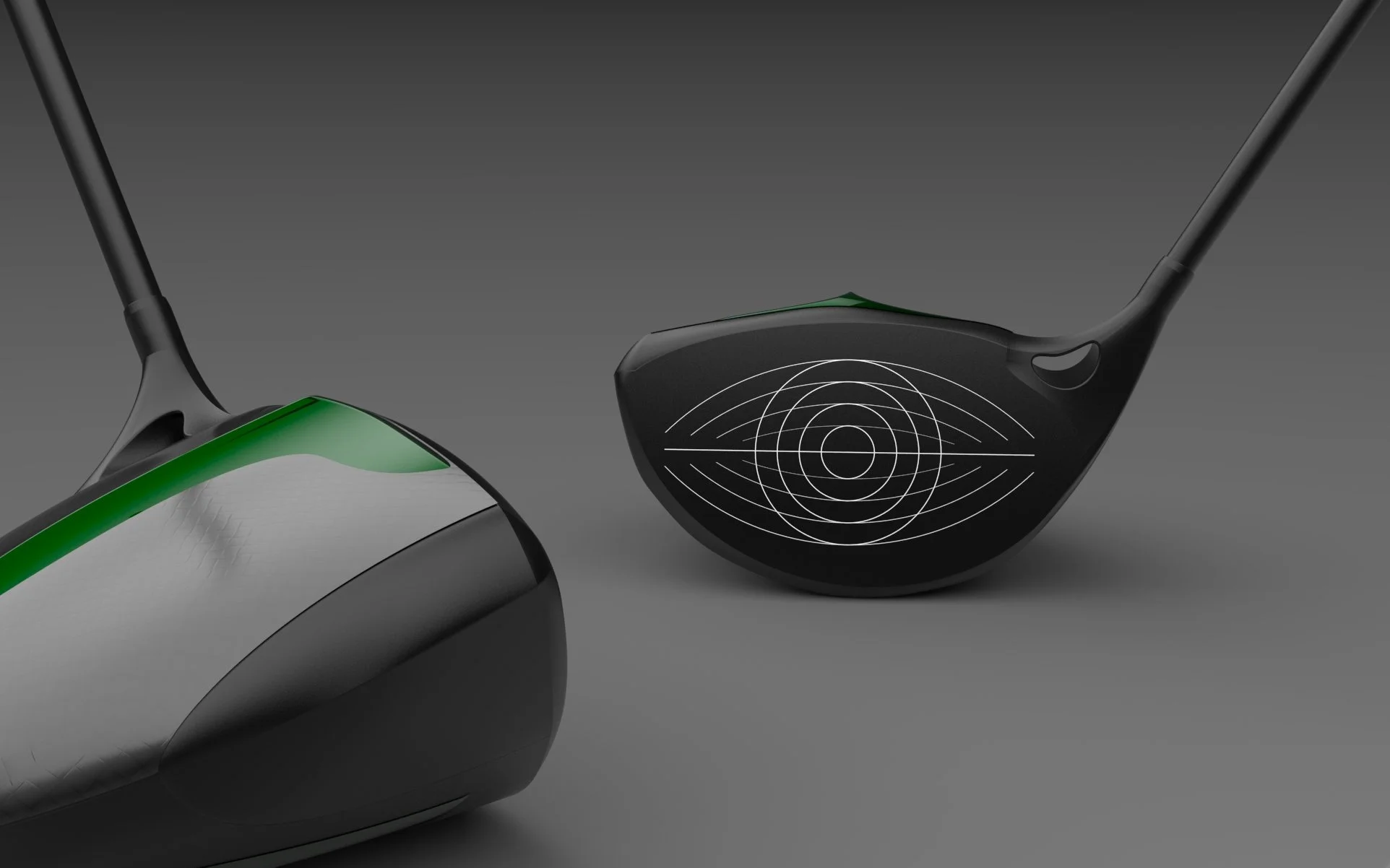
STNG Golf Driver
An independent, self-directed technical investigation into golf driver designs.

Why
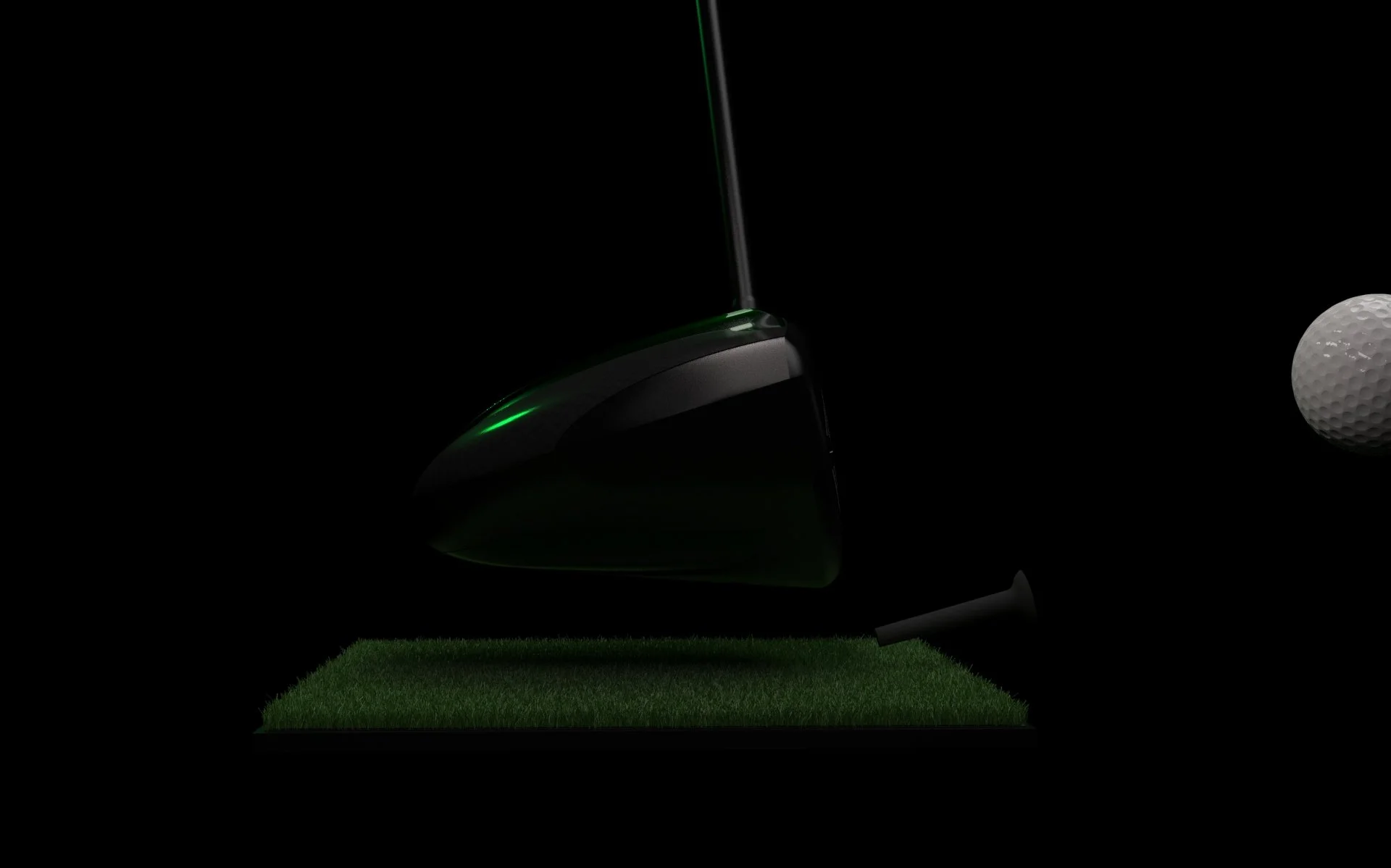
A highly technical product where performance, form, and visualization were developed together. Aerodynamic simulation informed the design process, while CAD surfacing and product visualization were used to develop and present the final product.
Golf Intention
A golf driver presents a unique design challenge because it is highly constrained by both performance requirements and established conventions. Small changes to the geometry can affect how the club performs, while proportions, surfaces, and visual details shape how the final product is perceived.
Concept #1:
Fin-like crown structure to control turbulence and guide airflow.
Physics Goals Addressed:
Minimize Kinetic Energy Loss: Reduces drag by controlling airflow separation.
Turbulence Management: Directs air in a stable, narrow wake.
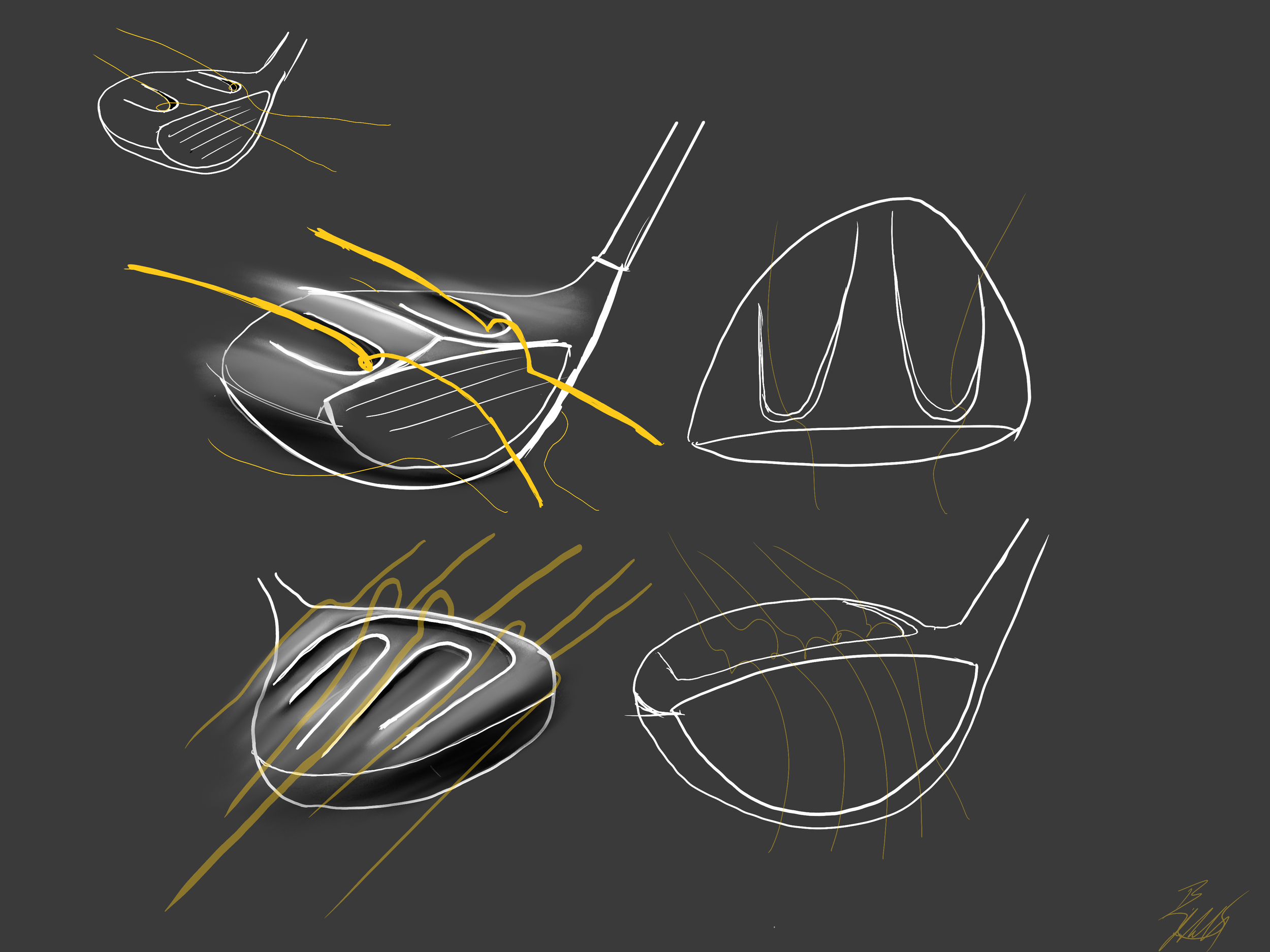
Concept #3:
Curved crown & flat sole for minimal resistance.
Physics Goals Addressed:
Flow Direction: Air efficiently glides around all sides of the clubhead with an air pocket on the bottom to maintain attached air.
Airflow: Reduce pressure drag, reduce turbulent swirls, increase clubhead speed.
Research → Sketches
Key Principles
-
Reducing drag allows club to accelerate efficiently through swing
-
Stabilizes off-center hits for better forgiveness
-
Target high launch and low spin for max distance
-
Narrow air wake and smooth airflow minimize resistance
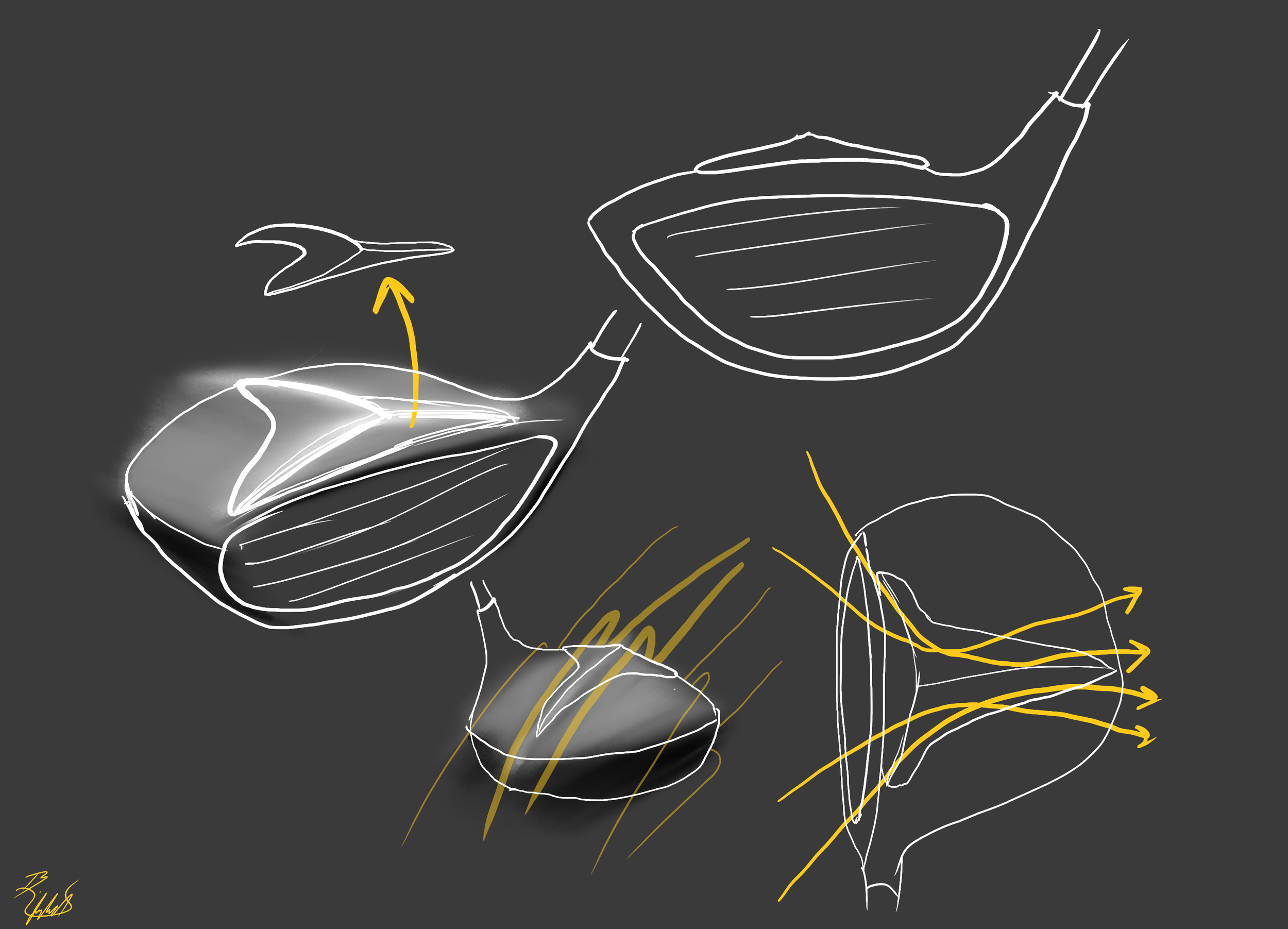
Concept #2:
Small pockets on the crown to maintain attached airflow, reduce drag, and control separation just after the face.
Physics Goals Addressed:
Flow Attachment: Keeps airflow attached to the surface, reducing resistance.
Transition Control: Smooths airflow transition from face to crown.
Launch Consistency: Supports predictable ball launch.
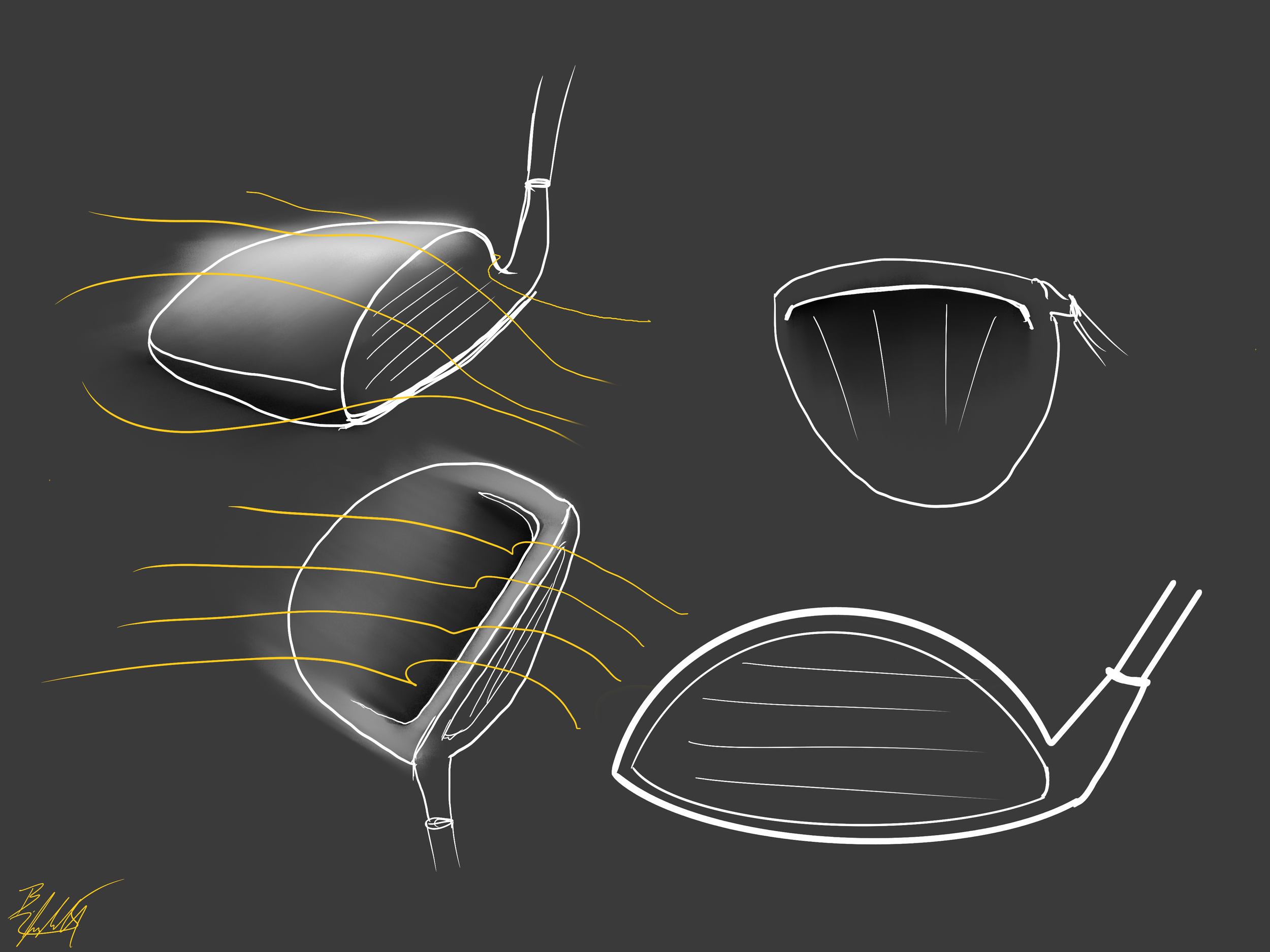
Concept 1 was ultimately chosen because its geometry may support predictable airflow patterns while minimizing the risk of excessive drag, all within USGA regulations.
Potential aerodynamic concerns with concept 2 included: possible high-drag recirculation zones, dead air pushing airflow away from the clubhead, or premature airflow separation.
CAD
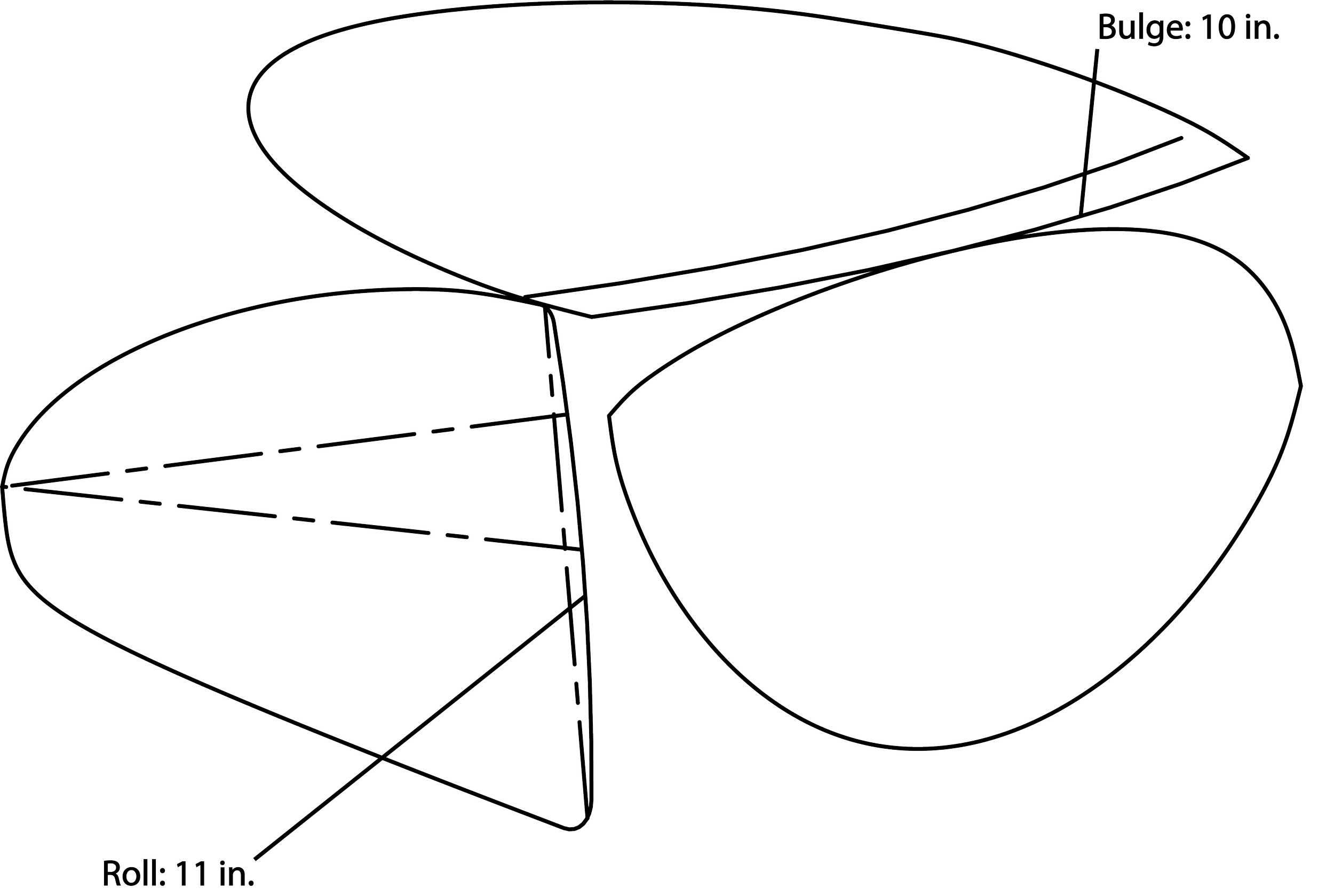
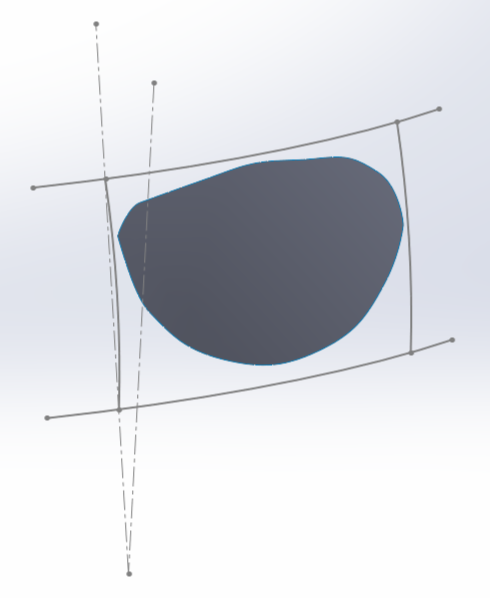
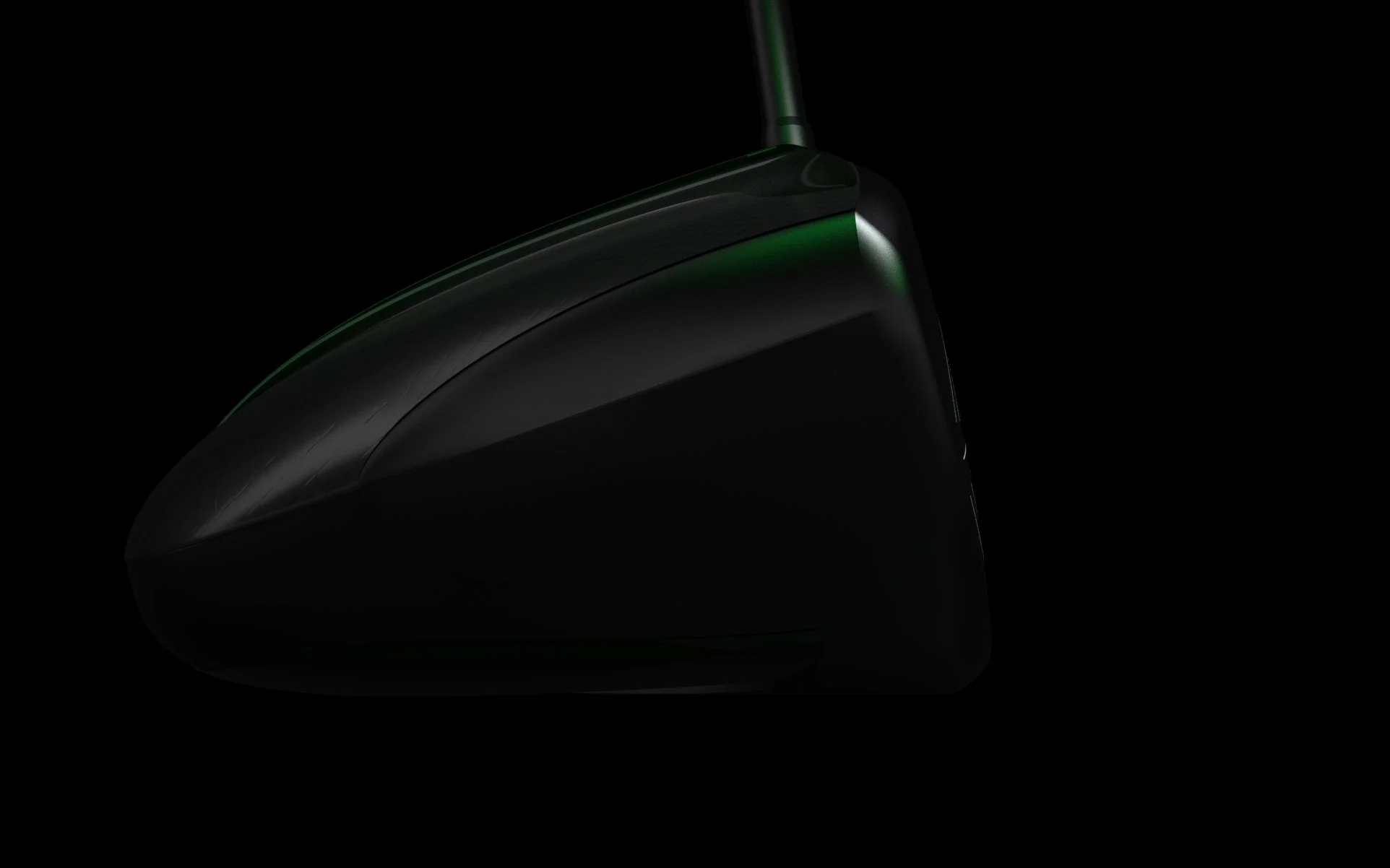
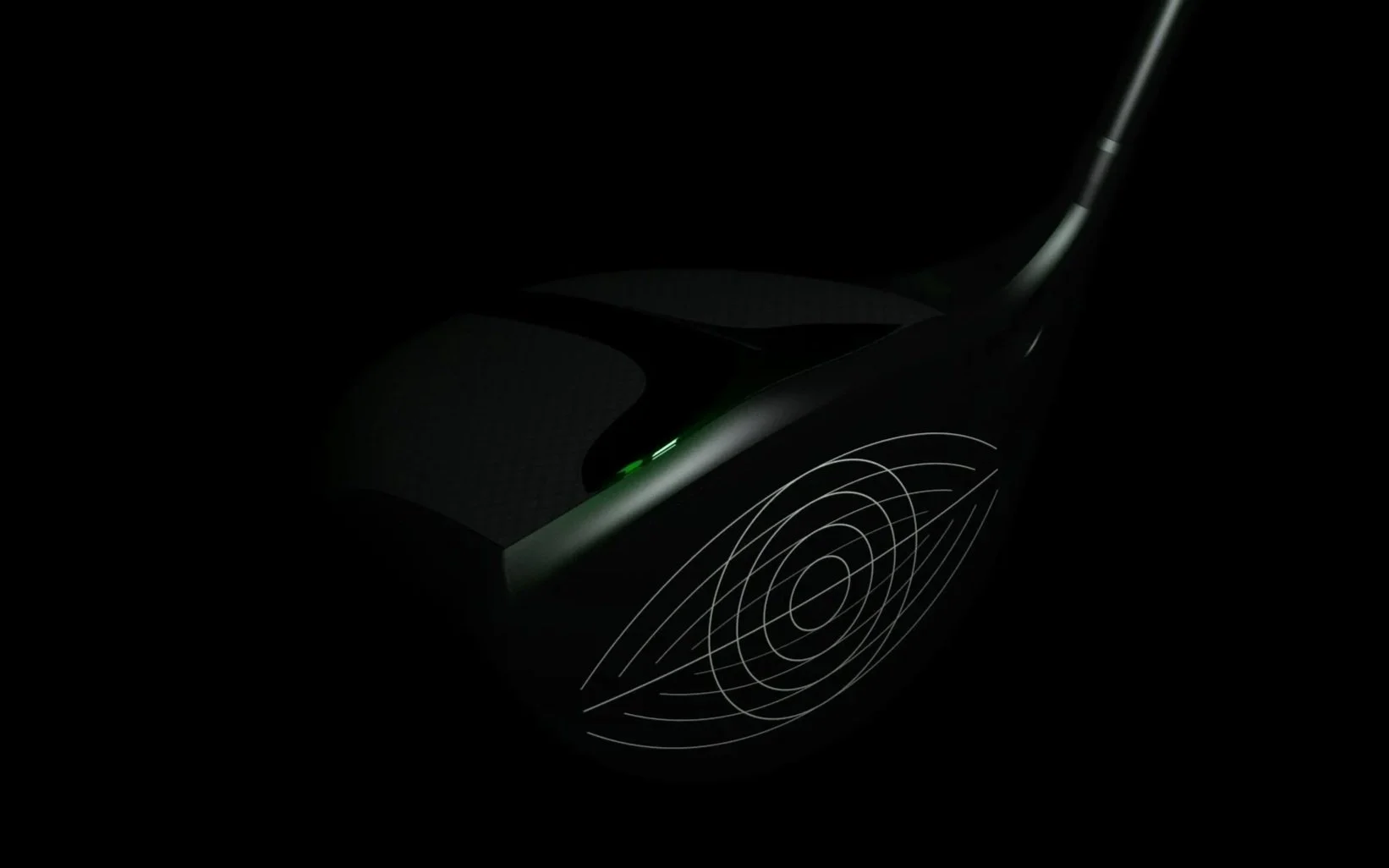
Using SolidWorks surface modeling tools, I replicated Concept 1 while ensuring all physical parameters and USGA legal restrictions were met.
Physical Considerations (Design Parameters):
Roll: 11 in.
Bulge: 10 in.
Loft: 10.5°
Weight Distribution: Optimized for MoI and balance
Groove Shape: must be U-shaped or square-shaped
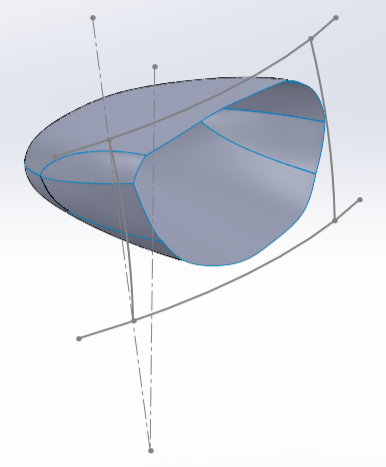
Large, rounded back created a loud desirable sound when striking the ball
Legal Considerations (USGA):
Coefficient of Restitution (COR): ≤ 0.83 (ball leaves the face at 83% of the clubhead speed)
Maximum Clubhead Volume: 460 cc
Club Length: Maximum 48 inches
Groove Dimensions: Groove width ≤ 0.035 inches, Groove depth: ≤ 0.020 inches

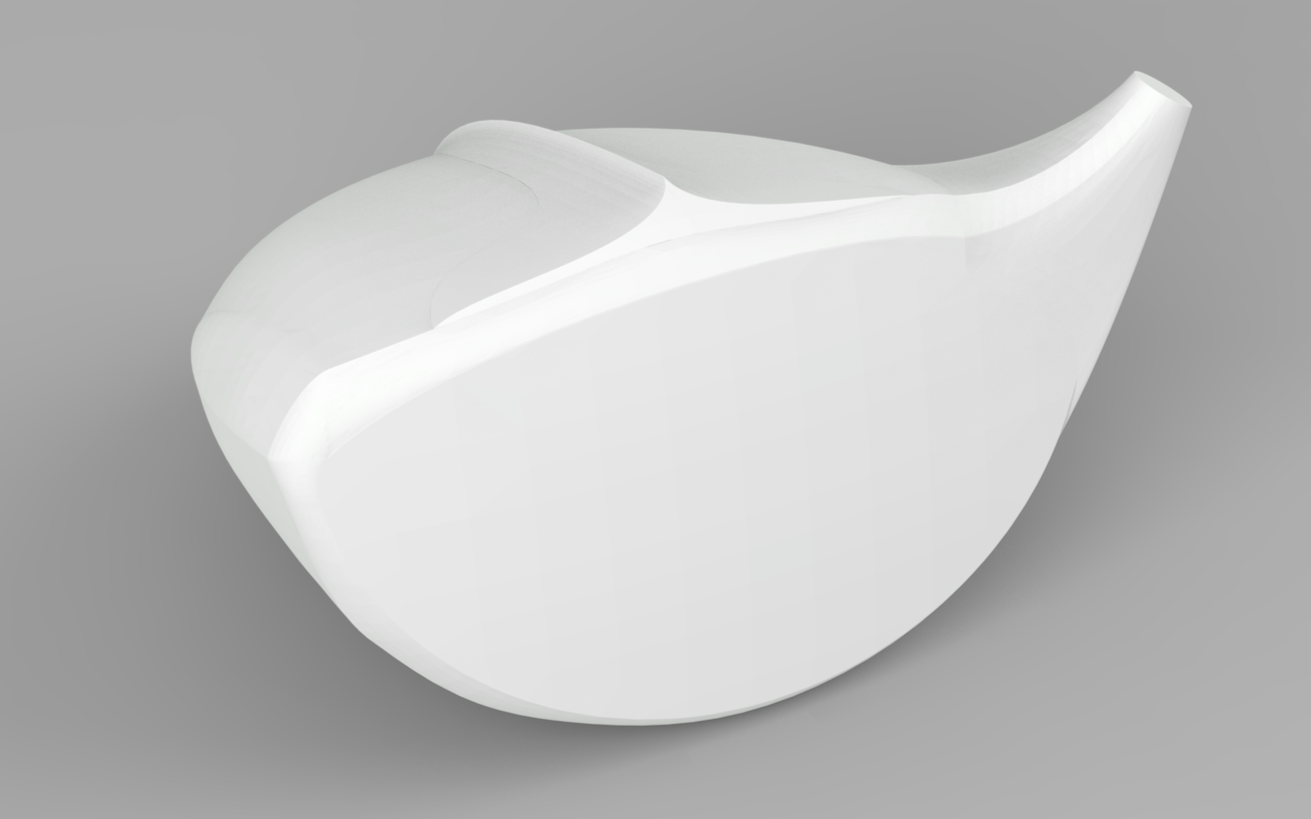
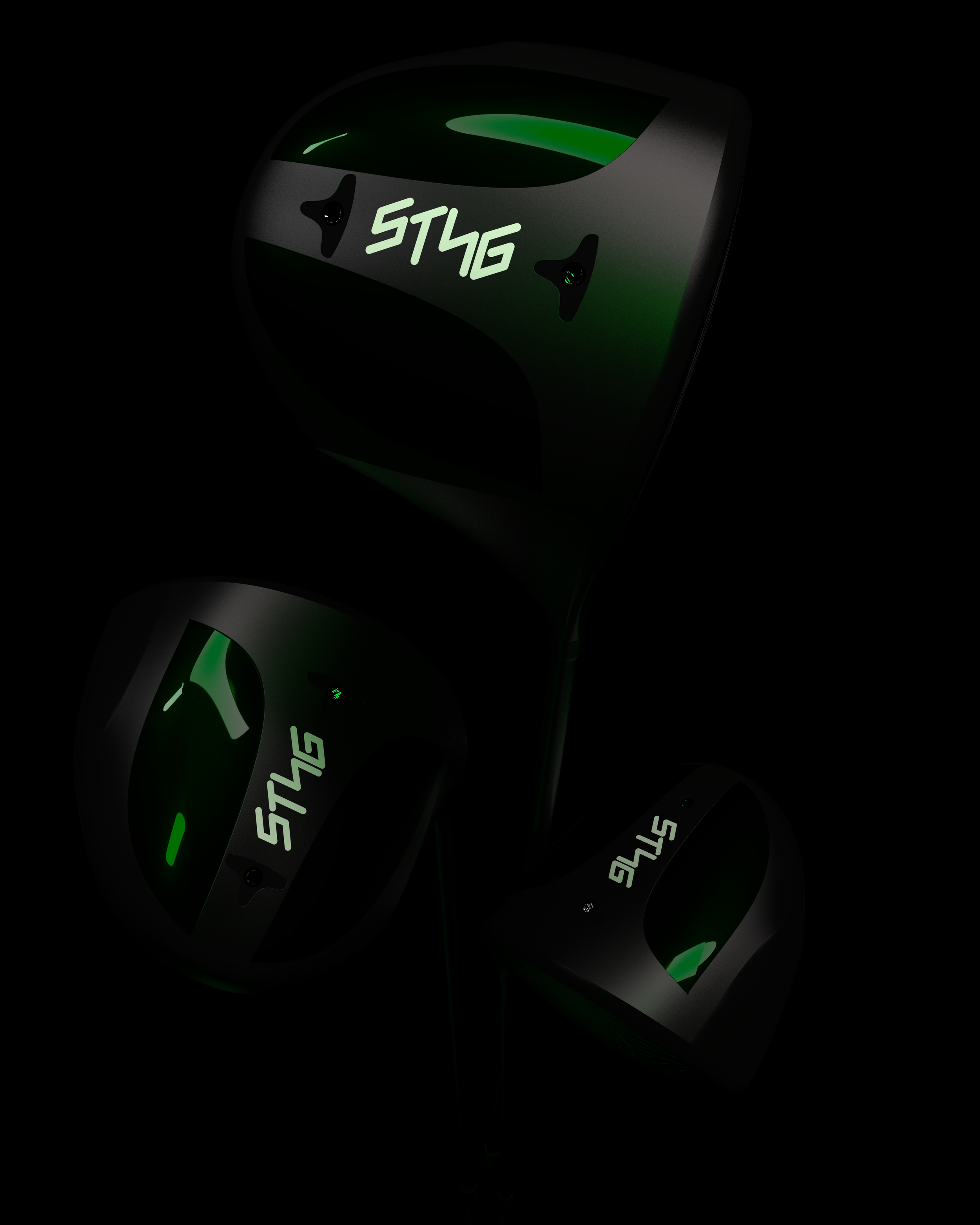
Weight Component Feature coming soon…
A weight on the toe of the driver helps raise moment of inertia by moving material away from the axis of rotation.
These weights are swappable for the golfer to find the best weight for them.

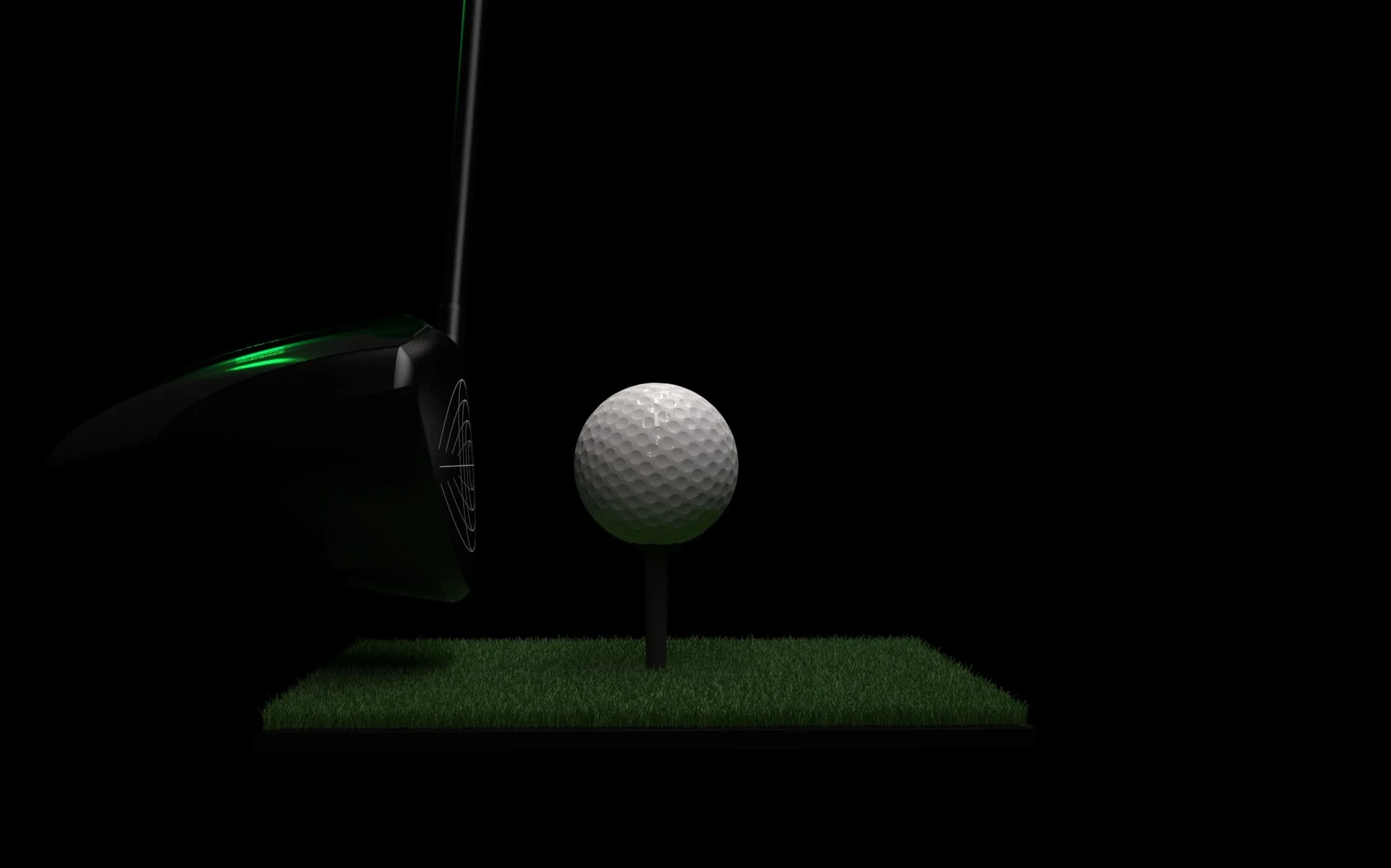
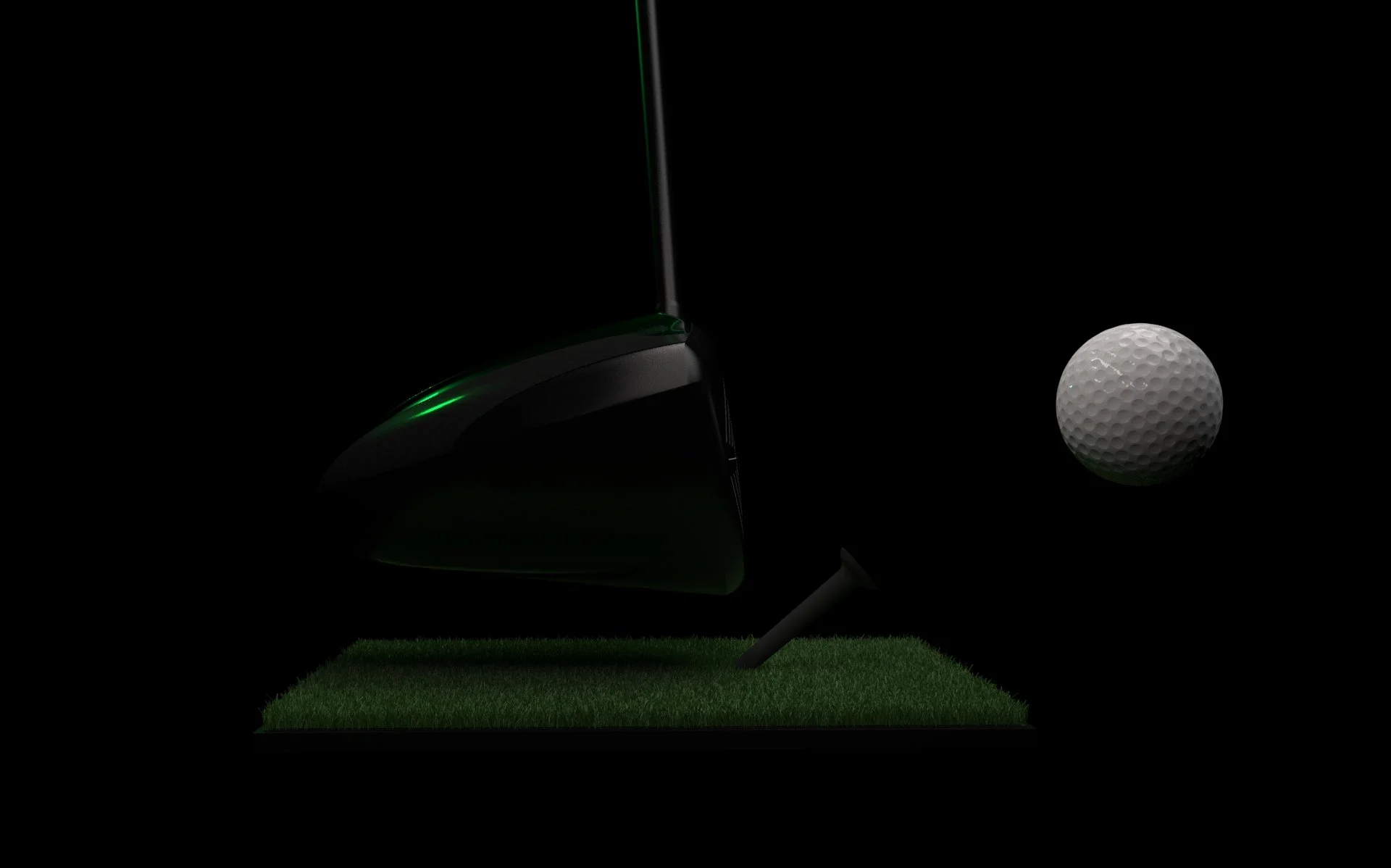
*Simulation done on SimScale*Aerodynamic Analysis
Goal
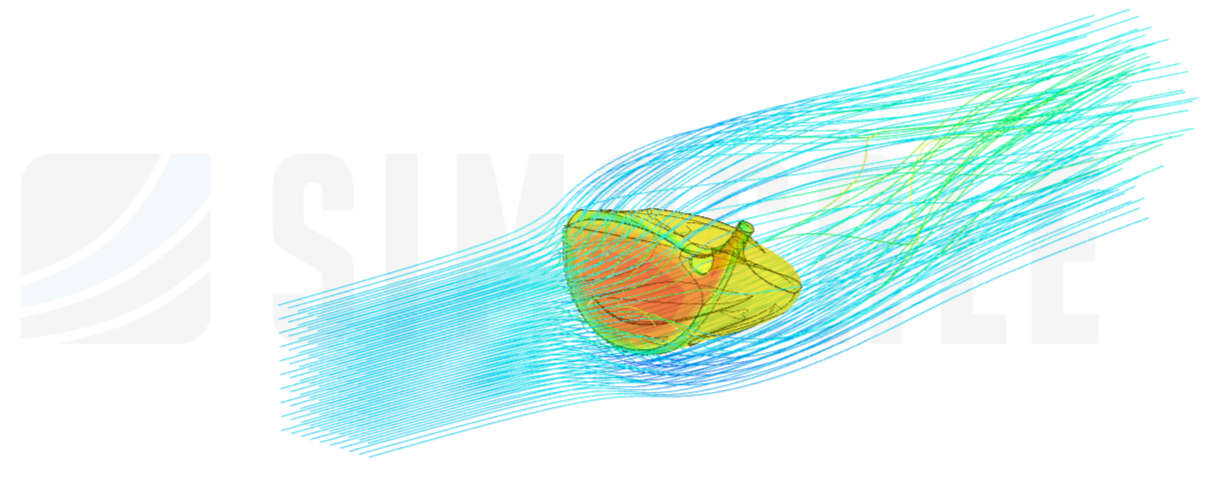
Explore how changes to the driver's exterior geometry affect airflow and use simulation as a tool to better understand the aerodynamic behavior of the design.
Simulation Details
Air Speed: 45 m/s
Simulation type: Incompressible CFD, steady-state
* Simulation is strictly linear. Natural curvature of golf swing was not tested*
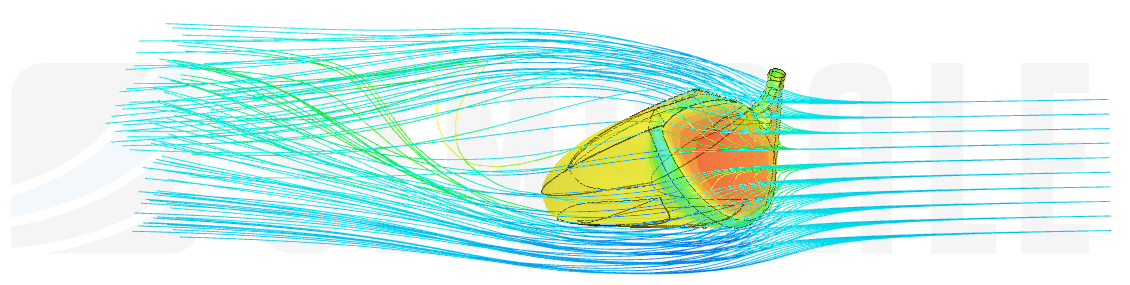
*Simulation done on SimScale*The simulation showed that airflow separated shortly after the face rather than remaining attached along the crown as intended. This provided a clearer understanding of how the driver's exterior geometry influenced airflow across the top surface.
While the design did not produce the aerodynamic behavior initially intended, the simulation became a useful way to visualize the interaction between the club head and surrounding airflow. The results also helped identify areas of the geometry that could be investigated further in future iterations.